Currently Reading.jpg)
Summary:
Seen by many as a contemporary classic, Janwillem van de Wetering's small and admirable memoir records the experiences of a young Dutch student―later a widely celebrated mystery writer―who spent a year and a half as a novice monk in a Japanese Zen Buddhist monastery. As Chogyam Trungpa Rinpoche, author of Cutting Through Spiritual Materialism , has written, The Empty Mirror "should be very encouraging for other Western seekers."
Thoughts:
August 3rd, 2026.jpg) ★★★★★
★★★★★
Summary:
In the tradition of the best investigative journalism, physician and reporter Sheri Fink reconstructs 5 days at Memorial Medical Center and draws the reader into the lives of those who struggled mightily to survive and to maintain life amid chaos.
After Katrina struck and the floodwaters rose, the power failed, and the heat climbed, exhausted caregivers chose to designate certain patients last for rescue. Months later, several health professionals faced criminal allegations that they deliberately injected numerous patients with drugs to hasten their deaths.
Five Days at Memorial, the culmination of six years of reporting, unspools the mystery of what happened in those days, bringing the reader into a hospital fighting for its life and into a conversation about the most terrifying form of health care rationing.
In a voice at once involving and fair, masterful and intimate, Fink exposes the hidden dilemmas of end-of-life care and reveals just how ill-prepared we are in America for the impact of large-scale disasters—and how we can do better. A remarkable book, engrossing from start to finish, Five Days at Memorial radically transforms your understanding of human nature in crisis.
Thoughts:
This book genuinely made my heart race. Just laying on my floor reading this scared as hell. The whole situation is so horrible. I didn't really know much about Katrina before this, but the way everything devolved so quickly got to me. I wanted to read about real hurricane situations after Fantasticlands fake one, but idk this was too real. The author adds all these small details that humanize everyone. There's a part where she mentions how one doctors dogs don't walk outside without boots on, and then a couple chapters later says how they were euthanized. Or just all the parts about how peoples' daughters wouldn't abandon their sick mothers AHHHHHHH. Agony. Amazing book I'm going to think about it forever.
July 15th, 2026.jpg) ★★
★★
Summary:
Since the 1970s, FantasticLand has been the theme park where “Fun is Guaranteed!” But when a hurricane ravages the Florida coast and isolates the park, the employees find it anything but fun. Five weeks later, the authorities who rescue the survivors encounter a scene of horror. Photos soon emerge online of heads on spikes outside of rides and viscera and human bones littering the gift shops, breaking records for hits, views, likes, clicks, and shares. How could a group of survivors, mostly teenagers, commit such terrible acts?
Presented as a fact-finding investigation and a series of first-person interviews, FantasticLand pieces together the grisly series of events. Park policy was that the mostly college-aged employees surrender their electronic devices to preserve the authenticity of the FantasticLand experience. Cut off from the world and left on their own, the teenagers soon form rival tribes who viciously compete for food, medicine, social dominance, and even human flesh. This new social network divides the ravaged dreamland into territories ruled by the Pirates, the ShopGirls, the Freaks, and the Mole People. If meticulously curated online personas can replace private identities, what takes over when those constructs are lost?
Thoughts:
I read this cause I saw YouTuber Davis Morgan say it was good, and cause it's in interview/fake true crime format. Chasing the high Penance by Eliza Clark gave me I guess. The idea of abandoned-disney-survival-horror carried this one. Like that's just an inherently interesting concept. Sadly the writting is bad :( Characters talk like tryhard relatable YA protagonists. There's something very Marvel movie about the whole thing. Also it's repetative and doesn't trust the reader to put together obvious plot threads. BUT it was entertaining. It delivers as a thriller in that regard. Even though I was eyerolling I really couldn't stop reading it. Overall tho it wasted the potential of this concept for "look at how much kids need their phones these days" social commentary and annoying quips.
July 9th, 2026.jpg) ★★★★
★★★★
Summary:
When a sharp cry wakes Jean in the middle of the night during a terrible tempest, she’s convinced it must have been a dream. But when the cry comes again, Jean ventures outside and is shocked by what she discovers—a young woman in labor, already drenched to the bone in the freezing cold and barely able to speak a word of English.
Although Jean is the only midwife in the village and for miles around, she’s at a loss as to who this woman is or where she’s from; Jean can only assume she must be the new wife of the neighbor up the road, Tobias. And when Tobias does indeed arrive at her cabin in search of his wife, Muirin, Jean’s questions continue to grow. Why has he kept his wife’s pregnancy a secret? And why does Muirin’s open demeanor change completely the moment she’s in his presence?
Though Jean learned long ago that she should stay out of other people’s business, her growing concern—and growing feelings—for Muirin mean she can’t simply set her worries aside. But when the answers she finds are more harrowing than she ever could have imagined, she fears she may have endangered herself, Muirin, and the baby. Will she be able to put things right and save the woman she loves before it’s too late, or will someone have to pay for Jean’s actions with their life?
Thoughts:
This was another read for my gay book club and omg it was so good. I am usually not big into romance novels too so it was a nice surprise. I found it so compulsive to read. All the characters were sweet and the setting felt real. There was something vivid about it all. Very easy to see in the minds eye. The ending seemed quite unrealistic, but idc I'm happy for them.
July 6th, 2026 ★★★★★
★★★★★
Summary:
Material Mystery considers three apparently anthropocentric myths that are central to Abrahamic religions―those of the primal human, the incarnated and possibly divine redeemer, and the resurrected body. At first glance, these stories reinforce a human-centered theology and point to a very anthropomorphic God. Taking them seriously seems to ignore the material turn in the humanities entirely, with the same sort of willful ignorance that some of our politicians show in declaring that their myths count as facts, or that the point of the rest of the world is to further human consumption.
But it is possible, Karmen MacKendrick shows, to read these figures through a particular tradition that emerges from the Hebrew Bible, the tradition of Wisdom as a creative force. Wisdom texts are common across the ancient Near East. As the idea of creative Wisdom develops from antiquity into the middle ages, it gathers philosophical influences from a range of philosophical traditions. This exuberantly promiscuous impurity―intellectual, artistic, and theological―generates new interpretive possibilities. In these interpretations, each human-like figure opens up onto the world''s matter, as an interdependent part of it, and matter is thoroughly mixed with divinity. Such mythic readings complement our factual, scientific understanding of the material world, to engage wider kinds of knowing and affective attention―particularly Wisdom''s combination of care and delight.
Thoughts:
This book works better than Lunesta to put me to sleep. Took forever to read cause after 5 pages I'd be out. That's not to say I didn't love it, I did.
The book is DENSE. I loved all the concepts. The first part was about Adam, and covered different accounts of creation. There were some ideas that saw Adam as a microcosmic thing. So the universe was recreated within man, but to be a perfect recreation, there must be infinite microcosmic things within Adam. It also covered how some creation narratives show the earth as a co-creator of man. That the flesh of man comes from dirt, but the soul of man comes from god.
The second part was the longest and about Jesus ofc. There was alot here about Gnostic ideas of creation and Pythagoreanism. Some Gnostics believed in these things called aeons (basically just different parts of god but seperated from god). The aeon of wisdom was incredibly upset that she couldn't be with the source (kinda like god but more than that. Like the source of everything and also everything?). To help her she was split between her physical form and her godly form joined the source. This made her earthly self full of desire, and from that desire the world was made through limit. Jesus is seen as limit in this context. This is when the Pythagoreanism stuff comes in. Cause Pythagoreans believed in this One and Two, or limit and the unlimited, that made up everything in the world. In this context Wisdom is the unlimited and Jesus is the limit. Through differentiation the matter that wisdom created through desire is turned into the world via Jesus. The arguement here is that matter is still holy because of the seeds of wisdom that preceded it. Like through recognizing the divine in the material we can be led back to god. This was confusing for reasons I'm sure are apparent if you're trying to read this, and also cause from what I know about gnosticism, the material world was made by the demiurge not Jesus. IDK Gnosticism was kinda anything goes I'm sure someone believed this.
The final part was about the resurected body. It discussed different ideas of resurection, like if people are continually resurected, if resurection is happening in the future or now, and if bodies are physically resurected. Lots of different ideas on all of these fronts. A lot if people seem to be for bodily resurection. The idea is that the soul is kinda married to the body it lives in. Some people believed in a sort of reincarnation, where people are reborn continually until their soul is perfected, and each part of the soul would be split between different bodies upon resurection. I really liked this Nietzsche idea of eternal recurrence. It says that all the world is in a cycle that infinitely repeats with everything being the same each time. In this worldview, all joys are repeated infinitely, but also all sorrows. Just an intersting concept.
I think the main idea of the book was the divinity in the everyday and how the spiritual is tied to the physical. I'm sure it's obvious I took a lot from it. Hopefully I understood it correctly lol.
July 2nd, 2026.jpg) ★★★
★★★
Summary:
We were just these innocent girls in the night trying to make something beautiful. We nearly died. We very nearly did, didn't we?
Samantha Heather Mackey couldn't be more of an outsider in her small, highly selective MFA program at New England's Warren University. A scholarship student who prefers the company of her dark imagination to that of most people, she is utterly repelled by the rest of her fiction writing cohort--a clique of unbearably twee rich girls who call each other Bunny, and seem to move and speak as one.
But everything changes when Samantha receives an invitation to the Bunnies' fabled Smut Salon, and finds herself inexplicably drawn to their front door--ditching her only friend, Ava, in the process. As Samantha plunges deeper and deeper into the Bunnies' sinister yet saccharine world, beginning to take part in the ritualistic off-campus Workshop where they conjure their monstrous creations, the edges of reality begin to blur. Soon, her friendships with Ava and the Bunnies will be brought into deadly collision.
Thoughts:
I didn't realize this took me so long to finish lol. I've been busy IG. The atmosphere of this book is very dreamlike, so if I'd had time to just immerse myself in it and read for hours I def would've liked it better. I kept getting confused by the surreal elements instead of excepting them as part of the atmosphere. It's a shame too cause I think the ridiculousness is the best part. Like the city the MC lives in has a store that only sells mini versions of food but also regular beheadings? One of her academic rivals only writes by scratching words into glass, and another one has been wearing a pair of cat ears for a year. Legend.
It's losing one star for the ending confusing me so so badly, and also the overuse of the phrase "like so many _____".
June 18th, 2026.jpg) ★★★
★★★
Summary:
Rick Veitch's fierce and darkly comic BRATPACK has long been considered a subterranean classic of the genre. Now, at last, the notorious graphic novel that made the mainstream safe for totally twisted superhero satires is available in a new KING HELL trade paperback edition! Veitch's no-holds-barred dissection of the hoary old 'kid sidekick' phenomena is as harrowing as it is hilarious; subversively subtle yet completely over the top. BRATPACK is an edgy and unforgettable dance macabre that is a must for every graphic novel collection.
Thoughts:
Was so enamored by the cover I had to read this. I used to love comics in middle school and never truly recovered, so this was nostalgic. That said this was soooo over the top. I get it's supposted to be satire of what conservative media thought super heros were like + the author being burnt by the industry BUT it's so grimdark it's kinda funny. Like what if Batman was GAY and a PEDO and Wonderwoman CASTRATED DUDES and Captain America was a NAZI???? It's so much. Kinda too much for me, but it was engrossing.
June 16th, 2026 ★★★★
★★★★
Summary:
Exploring how neoliberalism has discovered the productive force of the psyche Byung-Chul Han, a star of German philosophy, continues his passionate critique of neoliberalism, trenchantly describing a regime of technological domination that, in contrast to Foucault’s biopower, has discovered the productive force of the psyche. In the course of discussing all the facets of neoliberal psychopolitics fueling our contemporary crisis of freedom, Han elaborates an analytical framework that provides an original theory of Big Data and a lucid phenomenology of emotion. But this provocative essay proposes counter models too, presenting a wealth of ideas and surprising alternatives at every turn.
Thoughts:
I read this sadly because I saw a guy on instagram reels reference it and was intrigued. It is very dense but very short. I'm not super into philosophy either, and this was not the place I should've started tbh. All this aside though I really liked it.
The main idea is that neoliberalism has created new kind of domination, where instead of outside forces making us to labor, we force ourselves to labor constantly by seeing ourselves as a product. This form of domination comes with data being the new most valuable asset. We create more data mainly via communication online. Everything we share about ourselves or reveal through internet history is known by data companies, and is converted to profit. This type of self-survaliance is encouraged to be as fast as possible, and we want the validation of algorithms, so all undigestable details of someone are flattened into easy to understand bites. The end of this the author warns is a taking over of free will by data companies having such complete profiles of us that they will find correlations even we do not know and be able to influence us at a subconcious level. All of this comes without truly understanding the WHY of this data, just stringing correlations together. Sorry if that was boring I feel writing out what I got from complicated books makes my thoughts ordered. Clearly I liked it tho. I'll def read his other work.
June 13th, 2026 ★★★★
★★★★
Link: Here
Summary:
Simone Weil is one of the few spiritual thinkers to give an adequate account for the place of suffering in our world. We traditionally view suffering as that which thwarts our most profound longings and happiness. Simone Weil insists that suffering is not a problem to overcome. Suffering, as it arises in the sacrifices of divine and human love is a fact of life, neither to be rejected nor invited, but also something that can shape human life by opening itself to the divine love.
Thoughts:
Read this very slowly before going to sleep every night. It was hard to get through at times, tho not as hard as Weil herself. I felt the author really explained Weils thoughts in a digestable way. It is kinda apologia for her more out there beliefs, but I got a lot out of the book.
Weil says that appreciating the beauty of the world, friendship, religious ceremony, and love of your neighbor as ways of indirectly loving god. She says that all these loves involve sacrifice as well, cause you have to give up what you want these things to be. Like you have to love the world as it is, people as they are, your friends without wanting something from them, ect. I just really liked that concept.
She also applies this concept to labor, and the idea that labor itself can be these forms of loving god. She says that capitalist and communist idealogies solve problems by promising good futures to workers now, but don't acknowledge the state of workers currently or the work that would have to be done to achieve these good futures. "Liberating workers from being workers" is what she says exactly. She has a concept of labor that sees it as a beautiful exceptance of the world and our neighbors, because in doing labor for others and experiencing the benefits of other peoples labor, you are accepting that you are a creature that needs others to survive. IDK I just really enjoyed that.
June 9th, 2026 ★★★★★
★★★★★
Summary:
Do you know what happened already?
Did you know her?
Did you see it on the internet?
Did you listen to a podcast?
Did the hosts make jokes?
Did you see the pictures of the body?
Did you look for them?
It's been nearly a decade since the horrifying murder of sixteen-year-old Joan Wilson rocked Crow-on-Sea, and the events of that terrible night are now being published for the first time.
That story is Penance, a dizzying feat of masterful storytelling, where Eliza Clark manoeuvres us through accounts from the inhabitants of this small seaside town. Placing us in the capable hands of journalist Alec Z. Carelli, Clark allows him to construct what he claims is the 'definitive account' of the murder - and what led up to it. Built on hours of interviews with witnesses and family members, painstaking historical research, and most notably, correspondence with the killers themselves, the result is a riveting snapshot of lives rocked by tragedy, and a town left in turmoil.
The only question is: how much of it is true?
Thoughts:
Eliza Clark I luv u. This was sooooo good. The girls portrayal seems so real to me. I know the narrator is unreliable, and you can def tell the times when it's purposfullly written to be written by a dude (Angelica calling herself moi...), but there is something honest here. Like the bullying the nastiness the retreating into an online world or an imagianary one. Eliza Clark does messed up women so well is basically it.
The way all these bad but boring things happen, like the hotel burning down or the girl drowning, and are then sensationalized as paranormal to make money really gets to me. The victim is always forgotten in the end so someone can use the creep factor to make money. Just so much to think about.
June 6th, 2026 ★★
★★
Summary:
Trina Goldberg-Oneka is a trans woman whose life is irreversibly altered in the wake of a gentle—but nonetheless world-changing—invasion by an alien entity calling itself The Seep. Through The Seep, everything is connected. Capitalism falls, hierarchies and barriers are broken down; if something can be imagined, it is possible.
Trina and her wife, Deeba, live blissfully under The Seep’s utopian influence—until Deeba begins to imagine what it might be like to be reborn as a baby, which will give her the chance at an even better life. Using Seep-tech to make this dream a reality, Deeba moves on to a new existence, leaving Trina devastated.
Heartbroken and deep into an alcoholic binge, Trina chases after a young boy she encounters, embarking on an unexpected quest. In her attempt to save him from The Seep, she will confront not only one of its most avid devotees, but the terrifying void that Deeba has left behind.
Thoughts:
This is another book I read for my gay bookclub. I was pretty excited because it seemed so up my alley. I think this book had some cool concepts, but felt really messy. Like it was all over the place. And I felt it was weird performatively, not in an authetic way. Random weird stuff was thrown in for the point of being weird instead of to add substance. It had some interesting stuff about how things can chang for the better and you can still mourn and want to keep the painful past, but it was really on the nose about this. Like the author would set up these complex metaphors (or I assume that's what they were. They were purposefully convoluted) but then would just explain the point she was trying to make a couple pages later. I think this author could be really good this whole thing was very first draft.
June 2nd, 2026.jpg) ★★
★★
Summary:
Private Cyril Bagger has managed to survive the unspeakable horrors of the Great War through his wits and deception, swindling fellow soldiers at every opportunity. But his survival instincts are put to the ultimate test when he and four other grunts are given a deadly venture into the perilous No Man’s Land to euthanize a wounded comrade.
What they find amid the ruined battlefield, however, is not a man in need of mercy but a fallen angel, seemingly struck down by artillery fire. This celestial being may hold the key to ending the brutal conflict, but only if the soldiers can suppress their individual desires and work together. As jealousy, greed, and paranoia take hold, the group is torn apart by their inner demons, threatening to turn their angelic encounter into a descent into hell.
Thoughts:
Not to sound like I know better cause I def don't but why did this win the Pulitzer Prize? Like it's fine. Kinda a mess. The unique draw for this is that it's all one sentence. That parts interesting, but it's more for show than adding that much. And this book just tells you what it wants that to mean in the first chapter. Like word for word,
“just like the war won’t ever end, like the carnage won’t ever end, it’s a sentence in a book careening without periods, gasping with too many commas, a sentence that, once begun, can’t ever be stopped, a sentence doomed to loop back on itself to form a terrible black wheel that, sooner or later, will drag each and every person to their grave”.
And this happens with every damn metaphor. The author present them and then in the next paragraph just says what it represents. Kinda annoying.
I thought the character ark Bagger goes through doesn't make linear sense, and neither does the angels motivations. Like Bagger has religious/patriotic guilt from his dad who has religious psychosis? and then he delivers the angel to the general even though he hates authority? and then he gets really into soldiering and abandons his friend who literally just died and he begged to be brought back to life? I'm confused. His big brother relationship with his friend is sweet to but the kid character is so flat it's kinda whatever.
Also! The prose is like overly flowery but in the opposite direction. Just overly gross to the point I can't take it seriously. And I just remember there's an evil disabled character who's evil cause he's disabled. I could keep going lol there's a lot to be annoyed with.
All this being said it does have good thriller writing. I really wanted to keep reading it and finished it fast but honestly kinda frustrating.
May 26th, 2026.jpg) ★★★
★★★
Link: Here
Summary:
This user-friendly book blends theory and practice, gently and concretely taking the reader through the first steps of contemplative prayer. Armchair Mystic begins with the necessary details of time and place to pray, then presents the maturation of the prayer life in four Talking at God, Talking to God, Listening to God and Being With God. Each chapter begins with an Orientation and ends with a concluding summary. Step-by-step exercises throughout the book provide concrete examples of how to use the concepts discussed. Armchair Mystic will prove invaluable to individuals and small groups who are new to contemplative prayer, or who wish to deepen their experience of it.
Thoughts:
Ever since reading The Sparrow I've been fascinated by Jesuits and Ignatian Prayer. This was a decent introduction to the concepts, but it was more self-help like than I was looking for. I probably should've picked up on that lol. But it was a good look inside the head of someone who prays this way and the type of relationship it fosters between god. As a self help book I found some of the instructory passages a little vague.
May 25th, 2026
.jpg)
★★★
Summary:
When Hester is diagnosed with terminal cancer on her fortieth birthday, she knows immediately what she must do: abandon her possessions and drive to California to kill her estranged father. With no friends or family tying her to the life she’s built in New York City, she quits her wildly lucrative job in corporate law and starts driving west. She hasn’t made it far when she runs into John, an environmental activist in need of a ride to different superfund sites across the United States. From five-star Midwestern hotels to cultish Southwestern compounds, the two slowly make their way across the country. But will the revelations they make along the way dissuade Hester from her goal?
Thoughts:
Read this as a Frankie's Shelf recommendation. They're a youtuber I trust for book stuff. I watched the whole video so I had spoilers but I was still intrigued. It's a very good book. Easy to read and the characters are interesting. I think the weird relationship between Hester and John is very sweet. They have this intimacy that neither would've chosen the other for. I liked John maybe more than I liked Hester, but I have a soft spot for moral OCD and religiosity.
All this said it's still three stars for me and I don't know why. Maybe it fell a little flat for me? I'm unsure. Frankie said something like that in their video too so maybe my view is colored. It's a good book just didn't leave an impression on me.
May 22nd, 2026
.webp)
★★★★
Summary:
Am I making it worse? I think I'm making it worse.
Everyone's favorite lethal SecUnit is back.
Following the events in Network Effect, the Barish-Estranza corporation has sent rescue ships to a newly-colonized planet in peril, as well as additional SecUnits. But if there’s an ethical corporation out there, Murderbot has yet to find it, and if Barish-Estranza can’t have the planet, they’re sure as hell not leaving without something. If that something just happens to be an entire colony of humans, well, a free workforce is a decent runner-up prize.
But there’s something wrong with Murderbot; it isn’t running within normal operational parameters. ART’s crew and the humans from Preservation are doing everything they can to protect the colonists, but with Barish-Estranza’s SecUnit-heavy persuasion teams, they’re going to have to hope Murderbot figures out what’s wrong with itself, and fast.
Yeah, this plan is... not going to work.
Thoughts:
Yippie more Murderbot. I thought this one was short and sweet. Fascinated by the robot PTSD angle but I wish they focused on it more I guess. Murderbot to me has always read as having robot PTSD but this one just more overt in the naming of it. It felt like I was less impactful to the plot than it should've been. But that might've been the point. Like Murderbot can still do it's job even when messed up. Interesting that Murderbot had kinda stopped refering to itself as Murderbot in the last couple books but when it's mad at itself in this book it goes back to that... I also wish there was more Three. I'm curious about it. But I really liked getting to see ART's crew interact more. Tarik is so interesting to me I'd love to learn about his life in the corporation. Also Ratthi was so cutesy in this one.
May 15th, 2026
.jpg)
★★★★
Summary:
It calls itself Murderbot, but only when no one can hear.
It worries about the fragile human crew who've grown to trust it, but only where no one can see.
It tells itself that they're only a professional obligation, but when they're captured and an old friend from the past requires urgent assistance, Murderbot must choose between inertia and drastic action.
Drastic action it is, then.
Thoughts:
Another Murderbot win. I needed fiction after literally 2 months of anthropolgy religion books. Also I associate Murderbot books with summer, so I've been waiting to read this. I loved the interactions in this book. Murderbot is so fun with ART and I loveeeee them. ART/MB is so good. Perfect like QPR platonic soulmates situation. All the human characters where nicey too. I LOVE AMENA. Also the bit with Ratthi thinking MB and ART are romantic is fun to me. I liked the begining when MB got to go to a film festival, and the details about it sharing media with Mensa's kids. Just lots of friendship for me to enjoy. It get's one star off cause I had a lot of trouble following the mystery element. Maybe it's my fault, maybe it's tech jargon idk.
May 14th, 2026
.webp)
★★★★
Summary:
Two boys, alone in space.
After the first settler on Titan trips her distress signal, neither remaining country on Earth can afford to scramble a rescue of its own, and so two sworn enemies are installed in the same spaceship.
Ambrose wakes up on the Coordinated Endeavor, with no memory of a launch. There’s more that doesn’t add up: Evidence indicates strangers have been on board, the ship’s operating system is voiced by his mother, and his handsome, brooding shipmate has barricaded himself away. But nothing will stop Ambrose from making his mission succeed—not when he’s rescuing his own sister.
In order to survive the ship’s secrets, Ambrose and Kodiak will need to work together and learn to trust one another… especially once they discover what they are truly up against. Love might be the only way to survive.
Thoughts:
I read this only cause I wanted to join this gay book club in my town, but they mostly read like romance fantasy stuff. Truly I thought I would hate it. I'm not into YA and I'm not into romance. Nothing against those genres, just not my thing. This was actually really good though! The writing is a little juvenile, and so are the characters. Not in a bad way just I can tell it's for highschoolers. The cold war thing is a little corny too. But the plot is great. So engaging and actually quite messed up. It really reads like a thriller. Very compulsive. The romance was cute too. I like romances where people are kinda "fated" to be together in a way that's awful. Like they have to be with one and other because there's no one else (If you've read A Touch of Jen or seen the show Beef it's that vibe). This romance isn't that awful, but it's got enough of those elements for me to be invested.
May 5th, 2026
.jpg)
★★★★
Summary:
In Jesus in Our Wombs, Rebecca J. Lester takes us behind the walls of a Roman Catholic convent in central Mexico to explore the lives, training, and experiences of a group of postulants―young women in the first stage of religious training as nuns. Lester, who conducted eighteen months of fieldwork in the convent, provides a rich ethnography of these young women's journeys as they wrestle with doubts, fears, ambitions, and setbacks in their struggle to follow what they believe to be the will of God. Gracefully written, finely textured, and theoretically rigorous, this book considers how these aspiring nuns learn to experience God by cultivating an altered experience of their own female bodies, a transformation they view as a political stance against modernity.
Thoughts:
Omg I'm finally free from this book. That sounds so mean, but it's how I feel. The book is not bad at all, just very academic. I'm not deep enough into antropology to understand half of it. I was also more interested in how women in convents experience god, not the formation of a nuns identity, which is really what this book is about. Really good if you're interested in ideas of gender in nuns or like changing ideas of womenhood in Mexico. I wasn't interested in either of those things, but they turned out to be interesting enough I kept reading. Just soooo academic. There is an unadressed maybe lesbian nun side plot though.
April 21st, 2026
.jpeg)
★★★★
Summary:
How do gods and spirits come to feel vividly real to people--as if they were standing right next to them? Humans tend to see supernatural agents everywhere, as the cognitive science of religion has shown. But it isn't easy to maintain a sense that there are invisible spirits who care about you. In How God Becomes Real, acclaimed anthropologist and scholar of religion T. M. Luhrmann argues that people must work incredibly hard to make gods real and that this effort--by changing the people who do it and giving them the benefits they seek from invisible others--helps to explain the enduring power of faith.
Drawing on ethnographic studies of evangelical Christians, pagans, magicians, Zoroastrians, Black Catholics, Santeria initiates, and newly orthodox Jews, Luhrmann notes that none of these people behave as if gods and spirits are simply there. Rather, these worshippers make strenuous efforts to create a world in which invisible others matter and can become intensely present and real. The faithful accomplish this through detailed stories, absorption, the cultivation of inner senses, belief in a porous mind, strong sensory experiences, prayer, and other practices. Along the way, Luhrmann shows why faith is harder than belief, why prayer is a metacognitive activity like therapy, why becoming religious is like getting engrossed in a book, and much more.
Thoughts:
Very good but academic overview than ethnography. Which is what I signed up for lol. I really liked the comparative religion angle of this one. The part where she compares different cultural ideas of God within the same religious sect was super cool to me.
April 15th, 2026
.webp)
★★★★★
Summary:
How does God become and remain real for modern evangelicals? How are rational, sensible people of faith able to experience the presence of a powerful yet invisible being and sustain that belief in an environment of overwhelming skepticism? T. M. Luhrmann, an anthropologist trained in psychology and the acclaimed author of Of Two Minds, explores the extraordinary process that leads some believers to a place where God is profoundly real and his voice can be heard amid the clutter of everyday thoughts.
While attending services and various small group meetings at her local branch of the Vineyard, an evangelical church with hundreds of congregations across the country, Luhrmann sought to understand how some members were able to communicate with God, not just through one-sided prayers but with discernable feedback. Some saw visions, while others claimed to hear the voice of God himself. For these congregants and many other Christians, God was intensely alive. After holding a series of honest, personal interviews with Vineyard members who claimed to have had isolated or ongoing supernatural experiences with God, Luhrmann hypothesized that the practice of prayer could train a person to hear God’s voice—to use one’s mind differently and focus on God’s voice until it became clear. A subsequent experiment conducted between people who were and weren’t practiced in prayer further illuminated her conclusion. For those who have trained themselves to concentrate on their inner experiences, God is experienced in the brain as an actual social his voice was identified, and that identification was trusted and regarded as real and interactive.
Thoughts:
Soooooo good so up my alley. It's def just an ethnography so if you don't want to read a kinda dense book about Evangelicals then it'd suck. But I DID want to read a dense book about Evangelicals and I was so fed. This book is specifically about charismatic Evengelicals, the type that speak in tongues and stuff. Deeply fascinated by their conception of God. Like it's so individualized that God sends signs to tell you what color shirt to wear.
It all seems kinda fun until they start talking about demons and how people believe in demon possesion and everything. Just so interesting these people are totally normal folks but then every sunday they're exorcising demons. I saw that with no disrespect either, I with I had that level of belief in me lol. The only thing I wish was addressed more was the very conservative politics of Evangelicals. I think the charismatic churchs the author was in lean more left compared to others, but still. How can people believe in a supremely loving God and alsoooooo if your gay your going to hell?
April 2nd, 2026
.jpg)
★★★★
Summary:
A journalist describes an assignment in the mountains of Alabama which led to his spiritual journey into the world of holiness snake handling, a faith whose followers characteristically place themselves in life-threatening situations.
Thoughts:
Veryyyyyyyyy interesting. I need to see one of these snake handling churches before I die. I do wonder though if half the spiritual experiences described in this book are live music. Like the transcendant amazing out-of-body feeling the author describes sound to me how I feel in a good mosh pit. Anyways, the faith these people have is enviable. Nothing matters to them but God it seems.
One issue I do have with this book is the author is weird about the south. There's a lot in here about him discovering his southern roots and the rich culture in Appalachia. There's nothing inherently wrong with that, I'm literally from Apppalachia, but he really glazes over all the bad parts of the south in favor of some imagined noble past. He's very good at ignoring the questionable morals of people I guess. Like he starts going to these churches and befriending these people AFTER he learns that their old pastor tried to kill his wife with rattlesnakes. And he brings his young wife and daughter. Okay.....
March 28th, 2026.jpg)
★★★★
Summary:
The only member of the original mission to the planet Rakhat to return to Earth, Father Emilio Sandoz has barely begun to recover from his ordeal when the Society of Jesus calls upon him for help in preparing for another mission to Alpha Centauri. Despite his objections and fear, he cannot escape his past or the future.
Old friends, new discoveries and difficult questions await Emilio as he struggles for inner peace and understanding in a moral universe whose boundaries now extend beyond the solar system and whose future lies with children born in a faraway place.
Strikingly original, richly plotted, replete with memorable characters and filled with humanity and humor, Children of God is an unforgettable and uplifting novel that is a potent successor to The Sparrow and a startlingly imaginative adventure for newcomers to Mary Doria Russell’s special literary magic.
Thoughts:
My bestie Emilio Sandoz is back. I think I'd read anything about this guy I love him. This book isn't as good as the first, but still quiet lovely. More of a focus on "Do the ends justify the means" and forgiveness and such. I found the ending message very moving.
This one does have an issue the first one has where Russel gives characters an ethnicity and then 50% of their personality is explained as, "Well they're from X". In the first book it was like okayyyy maybe cause this is about first contact, but in this one it's just annoying.
ALSO I think if I was assaulted by aliens for months, and all my friends died, and I ate babies, and killed my kinda-kid, and lost faith in god it would take more than a year or two to recover and date. But idk maybe that's the power of an italian mafia princess. No hate to Gina tho I like her.
March 23th, 2026.jpg)
★
Summary:
Rob Bell's bestselling book Love Wins struck a powerful chord with a new generation of Christians who are asking the questions church leaders have been afraid to touch. His new book, What We Talk About When We Talk About God, will continue down this path, helping us with the ultimate big-picture issue: how do we know God? Love Wins was a Sunday Times bestseller that created a media storm, launching Bell as a national religious voice who is reinvigorating what it means to be religious and a Christian today. He is one of the most influential voices in the Christian world, and now his new book, What We Talk About When We Talk About God, is poised to blow open the doors on how we understand God. Bell believes we need to drop our primitive, tribal views of God and instead understand the God who wants us to become who we were designed to be, a God who created a universe of quarks and quantum string dynamics, but who also gives meaning to why new-born babies and stories of heroes and sacrifice inspire in us a deep reverence. What We Talk About When We Talk About God will reveal that God is not in need of repair to catch him up with today's world so much as we need to discover the God who goes before us and beckons us forward. A book full of mystery, controversy, and reverence, What We Talk About When We Talk About God has fans and critics alike anxiously awaiting, and promises not to disappoint.
Thoughts:
BORINGGGGGGG. Might be a me problem tho. It's all fine it's just very very very surface level stuff in my opinion. Like God is nice and such... and don't be anti-progress. There was a nice part about God being pro-progress and meeting society where it's at which explains the stuff in the Bible that's quiet evil as relatively progressive for the time. What a nice thought. I get why people like it like it's fine apologetics I think I'm just too deep in the religion hole so I was very bored.
March 18th, 2026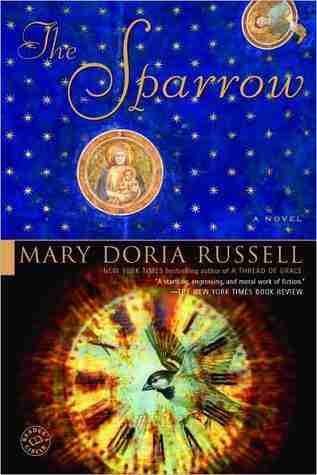
★★★★★
Summary:
In 2019, humanity finally finds proof of extraterrestrial life when a listening post in Puerto Rico picks up exquisite singing from a planet that will come to be known as Rakhat. While United Nations diplomats endlessly debate a possible first contact mission, the Society of Jesus quietly organizes an eight-person scientific expedition of its own. What the Jesuits find is a world so beyond comprehension that it will lead them to question what it means to be "human".
Thoughts:
No book has ever been more up my alley than this one. Priest main character, sci-fi, amazing cast of characters that are all domestic and lovely, loss of faith, insane ass side plots, debating the problem of evil, it has everything. I love Emilio like he's a real guy and I've never seen feeling abandoned by god shown so well. It's like when you grow up in religion, and remember how it felt to believe, and how bad that hurts when you can't sustain faith any longer.
Only complaint is I read this cause I saw someone say it was an uplifting story, which I don't know about all that. The start tricks you with the lovely friendships and relationships and domestic bliss. Truly some of the best frienships I've ever read. But then you get flashbanged. Shockingly heavy on the sexual violence.
But just amazing book and there's a sequel I'm so hyped.
March 10th, 2026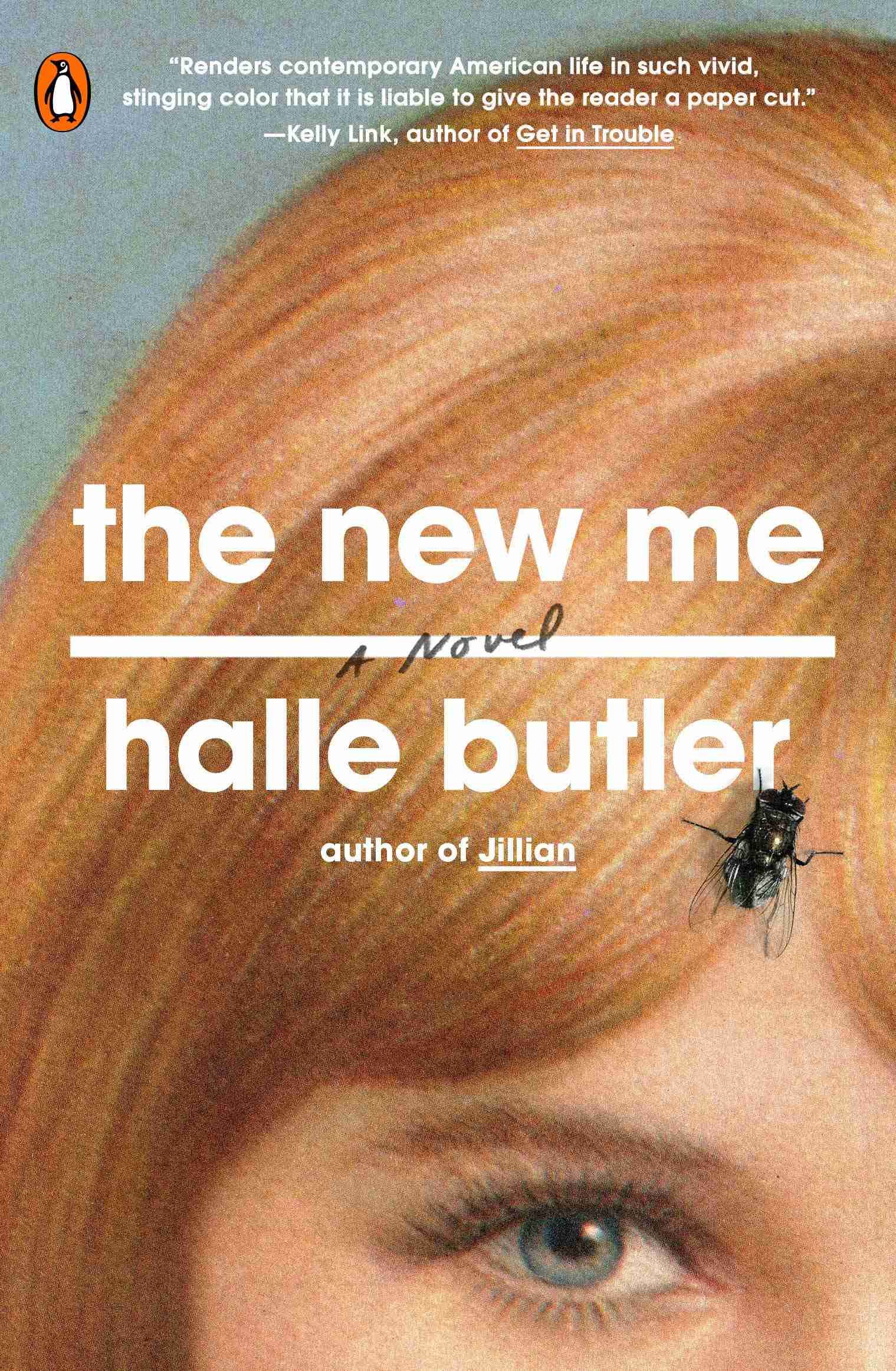
★★
Summary:
I'm still trying to make the dream possible: still might finish my cleaning project, still might sign up for that yoga class, still might, still might. I step into the shower and almost faint, an image of taking the day by the throat and bashing its head against the wall floating in my mind.
Thirty-year-old Millie just can't pull it together. Misanthropic and morose, she spends her days killing time at a thankless temp job until she can return home to her empty apartment, where she oscillates wildly between self-recrimination and mild delusion, fixating on all the little ways she might change her life. Then she watches TV until she drops off to sleep, and the cycle begins again.
When the possibility of a full-time job offer arises, it seems to bring the better life she's envisioning - one that involves nicer clothes, fresh produce, maybe even financial independence - within reach. But with it also comes the paralyzing realization, lurking just beneath the surface, of just how hollow that vision has become.
Thoughts:
Reminded me of when I tried to watch The Office and I couldn't because it made me too sad that everyone hated each other. There is some comedy, but it has a sort of millenial vibe. Nothing wrong with that, just not for me. I liked when she said, “My pits are slick, and my face smells like a bagel.” And I liked when she went to visit her loving parents. Other than that I read this very quickly so I wouldn't need to be sad about office workers anymore.
March 6th, 2026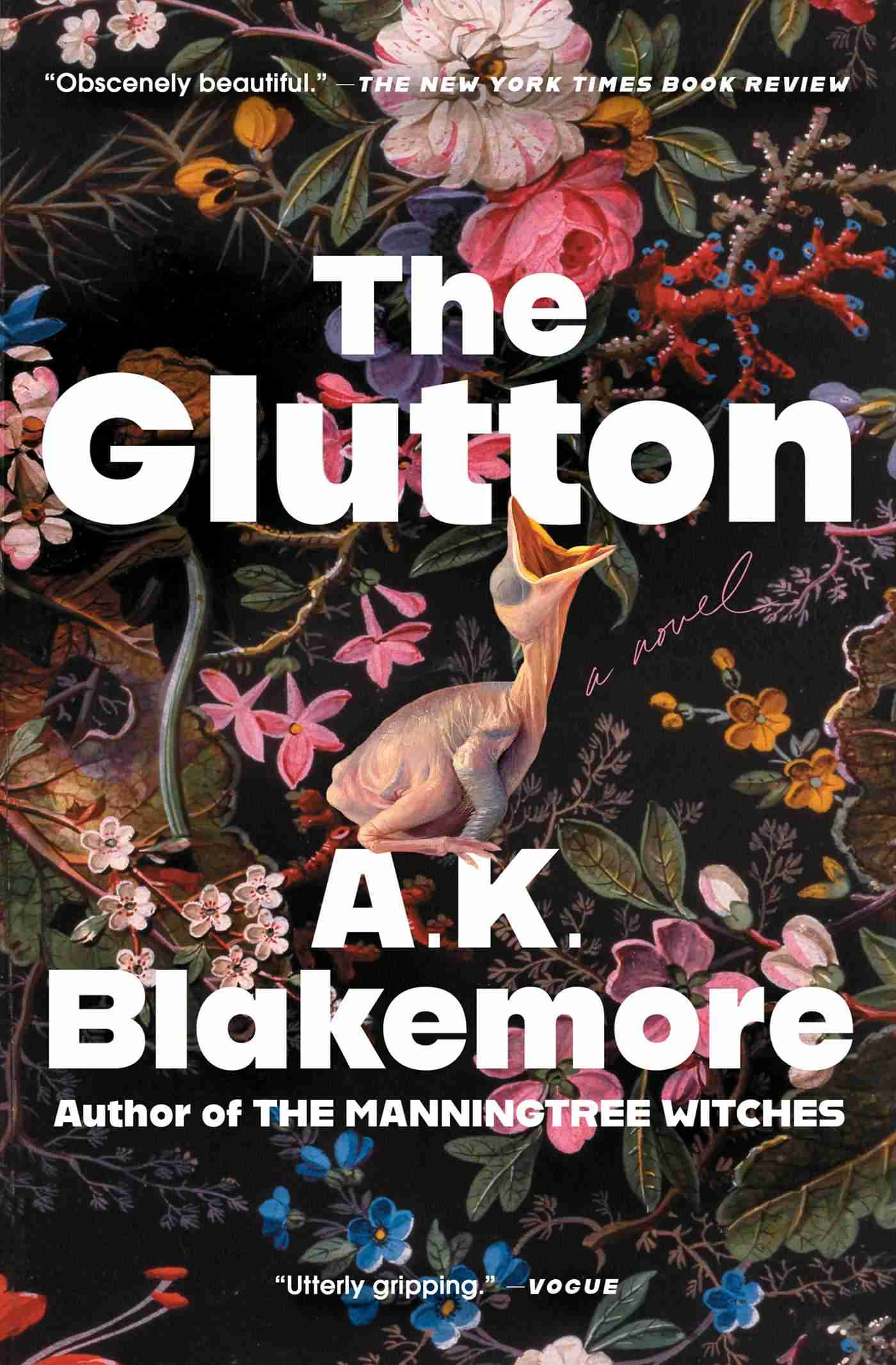
★★★★
Summary:
"1798, France. Nuns move along the dark corridors of a Versailles hospital where the young Sister Perpetué has been tasked with sitting with the patient who must always be watched. The man, gaunt, with his sallow skin and distended belly, is dying: they say he ate a golden fork, and that it’s killing him from the inside. But that’s not all—he is rumored to have done monstrous things in his attempts to sate an insatiable appetite… an appetite they say tortures him still.
Born in an impoverished village to a widowed young mother, Tarare was once overflowing with quiet affection: for the Baby Jesus and the many Saints, for his mother, for the plants and little creatures in the woods and fields around their house. He spends his days alone, observing the delicate charms of the countryside. But his world is not a gentle one—and soon, life as he knew it is violently upended. Tarare is pitched down a chaotic path through revolutionary France, left to the mercy of strangers, and increasingly, bottomlessly, ravenous."
Thoughts:
Going through a weird 17th century french guy phase reading this right after Perfume. This book is kinda Tumblr, which I say with love. Something about the writing style and the general historical changes. It's basically, "What if Tarare was a traumatized bisexual guy." And I ate it up. They even made him less deformed than historical accounts lol. Kinda confused why it starts with a framing device it abandons half-way through, but I'll forgive it.
March 3rd, 2026
★★★
Summary:
"In 1956, toward the end of Reverend John Ames's life, he begins a letter to his young son, an account of himself and his forebears. Ames is the son of an Iowan preacher and the grandson of a minister who, as a young man in Maine, saw a vision of Christ bound in chains and came west to Kansas to fight for abolition: He "preached men into the Civil War," then, at age fifty, became a chaplain in the Union Army, losing his right eye in battle.
Reverend Ames writes to his son about the tension between his father--an ardent pacifist--and his grandfather, whose pistol and bloody shirts, concealed in an army blanket, may be relics from the fight between the abolitionists and those settlers who wanted to vote Kansas into the union as a slave state. And he tells a story of the sacred bonds between fathers and sons, which are tested in his tender and strained relationship with his namesake, John Ames Boughton, his best friend's wayward son.
This is also the tale of another remarkable vision--not a corporeal vision of God but the vision of life as a wondrously strange creation. It tells how wisdom was forged in Ames's soul during his solitary life, and how history lives through generations, pervasively present even when betrayed and forgotten."
Thoughts:
Super calming book. Almost too calming cause I kept forgetting what I had read and having to re-read it. But it's a sweet book, more introspection than plot.
The grandpa's history as an aboltionist was the most interesting part to me. AND the story about the horse in the hole. That was so funny like what.
I wish it leaned more into the struggle of someone who wants to believe in god but can't. That's such a fascinating struggle but it was raised and not resolved. Maybe that's the point, not to resolve it, but I wish it was at least discussed more.
February 24th, 2026
★★★★
Summary:
"An acclaimed bestseller and international sensation, Patrick Suskind's classic novel provokes a terrifying examination of what happens when one man's indulgence in his greatest passion—his sense of smell—leads to murder.
In the slums of eighteenth-century France, the infant Jean-Baptiste Grenouille is born with one sublime gift—an absolute sense of smell. As a boy, he lives to decipher the odors of Paris, and apprentices himself to a prominent perfumer who teaches him the ancient art of mixing precious oils and herbs. But Grenouille's genius is such that he is not satisfied to stop there, and he becomes obsessed with capturing the smells of objects such as brass doorknobs and fresh-cut wood. Then one day he catches a hint of a scent that will drive him on an ever-more-terrifying quest to create the "ultimate perfume"—the scent of a beautiful young virgin. Told with dazzling narrative brilliance, Perfume is a hauntingly powerful tale of murder and sensual depravity."
Thoughts:
Silly little book. Felt like a fairytale. Lots of messed up stuff happens but it's told so fancifully I wasn't freaked out. So well written that even when the plot got kinda random I was still invested. I've never read a story where a charcters motivations are just, "He's evil" lol.
February 17th, 2026
★★★★
Summary:
"From the rubble-strewn streets of U.S.-occupied Baghdad, Hadi--a scavenger and an oddball fixture at a local café--collects human body parts and stitches them together to create a corpse. His goal, he claims, is for the government to recognize the parts as people and to give them proper burial. But when the corpse goes missing, a wave of eerie murders sweeps the city, and reports stream in of a horrendous-looking criminal who, though shot, cannot be killed.
Hadi soon realizes he's created a monster, one that needs human flesh to survive--first from the guilty, and then from anyone in its path. A prizewinning novel by "Baghdad's new literary star" (The New York Times), Frankenstein in Baghdad captures with white-knuckle horror and black humor the surreal reality of contemporary Iraq."
Thoughts:
You know the books going to be good when the first pages are a list of all the characters so you can keep track of them. There's so much happening in this book, but it works. TBH the characters aren't even that hard to keep track of. And all of them are lovely. Elishva and Hadi are my favs. They're two older people living in Baghdad and I want to read books just about them and their lives. Hadi felt very real, and I liked how he just wanted enough money to drink and have fun. His sadness at the death of his straight-laced bestie added to him. I want to read about their livessssss. Elishva I was really fond of, and was sad when the book moved away from her POV. I have a soft spot for eccentric religious characters lol.
My favorite thing is learning about the minutiae of a different time/place, which this book does great. I feel like I really got a glance into daily life in Baghdad. All the characters made the neighborhood feel alive. There's some great commentary about war and the cycle of violence that creates with the monster too. Also I liked the nods to the original Frankenstein, with the monster being a monologuing melodramatic dude, and the book starting as a story someone else is telling.
February 8, 2026_IMGCentury.jpg)
★★★
Summary:
"In 2024, with the world descending into madness and anarchy, one woman begins a fateful journey toward a better future.
Lauren Olamina and her family live in one of the only safe neighborhoods remaining on the outskirts of Los Angeles. Behind the walls of their defended enclave, Lauren’s father, a preacher, and a handful of other citizens try to salvage what remains of a culture that has been destroyed by drugs, disease, war, and chronic water shortages. While her father tries to lead people on the righteous path, Lauren struggles with hyperempathy, a condition that makes her extraordinarily sensitive to the pain of others.
When fire destroys their compound, Lauren’s family is killed and she is forced out into a world that is fraught with danger. With a handful of other refugees, Lauren must make her way north to safety, along the way conceiving a revolutionary idea that may mean salvation for all mankind."
Thoughts:
Good book, well written and everything, just didn't grip me. I think I'm still burnt out on dystopia from when I only read dystopia in middle school lol. I felt like the plot was kinda slow until the middle of the book, and even when the action began it was slightly repetitive for me. The characters are all nice, I like Zahara the best. I wish we could've gotten to know more about all the characters but for a large cast I think they
were all fleshed out pretty well.
The world building is the best element for me. I was super into the dystopia and how it seemed quite possible. There's no major disaster, just growing issues overtime while everyone tries to act like everythings fine. Lauren's religion is also a great part of the book. It's a perspective on God I haven't ever seen before, and a good religious view for the apocolypse lol.
If you've read the book I'm sure you know what I'm talking about, but a part that REALLY took me out of the book was Laurens romance. I think it really goes against some of the other themes of the novel. Other characters have backstories that show how relationships like that are predatory and traumatizing, but when Lauren does it everything okay? I don't get it :(
I'll probably eventually read the sequel just to know what happens and enter the world again, but I'll have to recover from all the dystopia stuff. If you like dystopia though this will be up your alley :)
February 5th, 2026
★
Link: Here
Summary:
"A collection of suicide notes accompanied by a brief description of who the individual was, what their note meant, and the circumstances which led up to their suicide"
Thoughts:
Very depressing, as you would expect. I was curious about this topic after seeing Virginia Wolfe's famous suicide note. But the commentary on the notes and the categorization really makes the whole thing feel hacky. Like, the book begins by telling you this is pornographic and you're a pervert or voyeur for reading it. YOU WROTE THE BOOK. and I think the book would feel much less like voyeuristically enjoying someone elses suffering if the commentary didn't read like freakshow advertisements.
There is totally a respectful way to present something like this, they just didn't do it. The notes themselves were heartbreaking as you'd think. If you're interested in the topic of suicide notes and what people usually put in them/blame their suicide on, this is a decent compilation. Just ignore all the commentary.
January 31, 2026 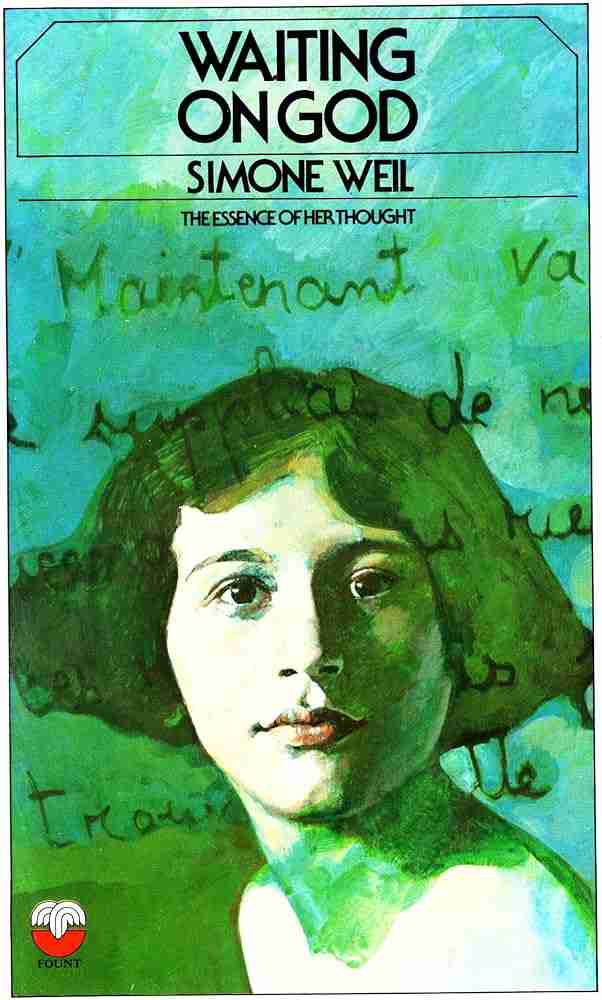
★★★
Summary:
"Emerging from the thought-provoking discussions and correspondence Simone Weil had with the Reverend Father Perrin, this classic collection of essays contains the renowned philosopher and social activist's most profound meditations on the relationship of human life to the realm of the transcendent. An enduring masterwork and "one of the most neglected resources of our century" (Adrienne Rich), Waiting for God will continue to influence spiritual and political thought for centuries to come."
Thoughts:
I was craving some difficult to read nonfiction and this was that. Simone Weil has some really interesting ideas, though I'm not sure I grasp them all. I think her thesis is basically the title. That longing for god is god or the closest we can hope to get to god. That we should be happy empting ourselves out and focusing all our attention on the desire for god, making ourselves an empty vessel for him, and being satisfied with that emptiness if god never comes.
Her obediance and devotion to god was certaintly moving. It has to feel great to be that devoted to anything.
A lot of what she talks about is stuff that doesn't make sense logically, but to me makes sense experiencially. She talks about affliction as the point of a nail being hammered into you, and that that pain brings you closer to god. Logically that doesn't make much sense, but experiencially I think that is true.
She also just says interesting stuff. I think she says god doesn't interfere with the world because god diminshed a part of himself to create the world, and that we are so diminished that his perfect-ness can't interact with us.
I don't agree but like what a concept. Overall very interesting, would reccomend if you want some ideas about religion I haven't seen elsewhere.
January 26, 2026 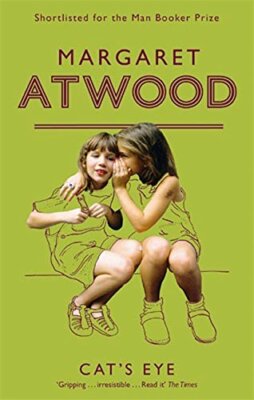
★★★★
Summary:
"Cat's Eye is the story of Elaine Risley, a controversial painter who returns to Toronto, the city of her youth, for a retrospective of her art. Engulfed by vivid images of the past, she reminisces about a trio of girls who initiated her into the fierce politics of childhood and its secret world of friendship, longing, and betrayal. Elaine must come to terms with her own identity as a daughter, a lover, and artist, and woman—but above all she must seek release from her haunting memories. Disturbing, hilarious, and compassionate, Cat's Eye is a breathtaking novel of a woman grappling with the tangled knots of her life."
Thoughts:
VERY GOOD! I think bullying usually isn't portrayed well in stories because they make it too violent and not emotional enough. This story gets what bullying is. If you're a girl whose been terrorized by girls, especially those who were your friends, you'll get this book.
I like the start of this book more than the later half, but the end is still good. The portrayal of forties culture and how that has affected the main characters art is great too. I just like to hear about different time periods.
I really liked this part,“This is what I miss, Cordelia: not something that’s gone, but something that will never happen. Two old women giggling over their tea.” Like isn't that agonizing.
January 16th, 2026
★★★★
Summary:
"A book that asks: Is there life after the internet?
As this urgent, genre-defying book opens, a woman who has recently been elevated to prominence for her social media posts travels around the world to meet her adoring fans. She is overwhelmed by navigating the new language and etiquette of what she terms "the portal," where she grapples with an unshakable conviction that a vast chorus of voices is now dictating her thoughts. When existential threats—from climate change and economic precariousness to the rise of an unnamed dictator and an epidemic of loneliness—begin to loom, she posts her way deeper into the portal's void. An avalanche of images, details, and references accumulate to form a landscape that is post-sense, post-irony, post-everything. "Are we in hell?" the people of the portal ask themselves. "Are we all just going to keep doing this until we die?"
Suddenly, two texts from her mother pierce the fray: "Something has gone wrong," and "How soon can you get here?" As real life and its stakes collide with the increasingly absurd antics of the portal, the woman confronts a world that seems to contain both an abundance of proof that there is goodness, empathy, and justice in the universe, and a deluge of evidence to the contrary.
Fragmentary and omniscient, incisive and sincere, No One Is Talking About This is at once a love letter to the endless scroll and a profound, modern meditation on love, language, and human connection from a singular voice in American literature."
Thoughts:
Really good. Extremely easy to read, extremely online. If you've gotten that "everyone is watching me" feeling from using the internet, then I think you'll get this book.
The second part is much better than the first, so don't give up too quickly. The love these characters have for the baby is beautiful.
I really liked how they said "She only knows being herself" or something similar. Got me thinking about different ways life is experienced and stuff, which is more than I thought I'd get out of a book about an influencer lol.
January 14th, 2026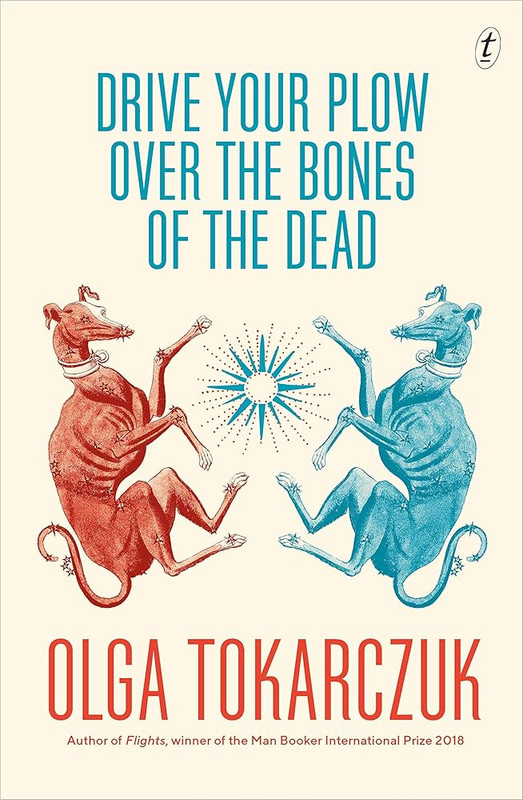
★★★
Summary:
In a remote Polish village, Janina devotes the dark winter days to studying astrology, translating the poetry of William Blake, and taking care of the summer homes of wealthy Warsaw residents. Her reputation as a crank and a recluse is amplified by her not-so-secret preference for the company of animals over humans. Then a neighbor, Big Foot, turns up dead. Soon other bodies are discovered, in increasingly strange circumstances. As suspicions mount, Janina inserts herself into the investigation, certain that she knows whodunit. If only anyone would pay her mind . . .
A deeply satisfying thriller cum fairy tale, Drive Your Plow over the Bones of the Dead is a provocative exploration of the murky borderland between sanity and madness, justice and tradition, autonomy and fate. Whom do we deem sane? it asks. Who is worthy of a voice?
Thoughts:
I liked this one. The reason it's only getting 3 stars is because I was expecting a murder mystery, and then that wasn't really what the story was about. If you want a character study/introspection on an interesting old woman than this is that book! and I liked it for that.
The main character was deeply endearing to me. Her voice really nailed the eccentric old lady thing. The relationships between the towns folk and her were my favorite parts of the book. The part in the middle when the entomologist is visiting is my favorite. Very solid book overall, just needs a less deceptive description I guess.
January 7th, 2026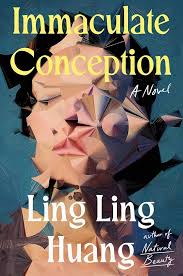 ★★★
★★★
Summary:
What if you could enter the mind of the person you love the most?
Enka meets Mathilde in art school and is instantly drawn to her. Mathilde makes art that feels truly original, and Enka—trying hard to prove herself in this fiercely competitive world—pours everything into their friendship. But when Mathilde’s fame and success cause her to begin drifting away, Enka becomes desperate to keep her close.
Enter SCAFFOLD. Purported to enhance empathy, this cutting-edge technology could allow Enka to inhabit Mathilde’s mind and access her memories, artistic inspirations, and deep-seated trauma. Undergoing this procedure would link Enka and Mathilde forever. But at what cost?
Blisteringly smart, thought-provoking, and shocking, Immaculate Conception offers us a portrait of close friendship—achingly tender and twisted—that captures the tenuous line between love and possession that will haunt you long after you turn the final page.
Thoughts:
This book is just every sci-fi concept ever + toxic girl friendship + weird fine art drama. And I was sat.
It's incredibly entertaining, but maybe not the most well written. There's so much exposition, not even folded in nicely, and then the world building that was just established gets forgotten in a chapter. This book has AI commentary, genetic engineering, cloning, mind-reading stuff, YA dystopia style divided cities, women having babies without men, and so much other concepts that could all be their own book. I feel that most of these topics weren't explored to their fullest.
That's the same issue I have with the toxic girl friendship. It's what the book is about, but I feel like they could've explored it more or had the two women interact more.
Despite all this I was so entertained by this book. It's easy to read and I was constantly wondering what would happen next cause something unheard of was happening every page. I would recomend it just for that.
December 23rd, 2025.jpg) ★★★★
★★★★
Summary:
Set largely on the pages of a website where gay male escorts are reviewed by their clients, and told through the postings, emails, and conversations of several dozen unreliable narrators, The Sluts chronicles the evolution of one young escort's date with a satisfied client into a metafiction of pornography, lies, half-truths, and myth. Explicit, shocking, comical, and displaying the author's signature flair for blending structural complexity with direct, stylish, accessible language, The Sluts is Cooper's most transgressive novel since Frisk, and one of his most innovative works of fiction to date.
Thoughts:
Read this when my insomnia was getting soooo bad and thought it might've been cause I was reading this before bed. It wasn't, but this book does stress me out. The format is fun, and it's a very compulsive read, but it is rough. Just all these dudes talking casually about abusing a maybe-underage prostitute, how nonchalant they are about it... The book feels very cruel. The ending didn't do it for me. I don't know if the book earned the right to go the places it did basically. I think that was the point tho. That these extreme horrible things could happen and no one would care except to get off to it.
November 19th, 2025.jpg) ★★
★★
Summary:
It was decreed from the moment she was born. Twenty-three-year-old Reality Kahn would embark on a quest so great, so bold. She would become the greatest girlfriend of all time. She would be a zine maker, an aspiring notary, the greatest waterslide commercial actress on the Eastern Seaboard. She would receive messages from the beyond in the form of advice from the esteemed and ancient ladies magazine, Girlfriend Weekly.
When she attends a party in Gowanus at a punk venue known as “Paradise,” Reality meets Ariel, who will become her boyfriend. She bravely works for his everlasting affection and joins a clinical trial created by Dr. Zweig Altmann to help her become a more perfect girlfriend. She stars in a new commercial. She learns how to become an indelible host. But Reality will also learn that sheer will and determination, and a very open heart, are not always enough to make true love manifest.
At turns laugh-out-loud funny, tragic, and jarring, Reality’s quest grows ever complicated as the men in her Ariel, her waterpark commercial agent Jethro, and Dr. Altmann himself prove treacherous. Paradise Logic is a thrilling, psychosexual breakdown of our obsession with authentic true love, asking whether that is even possible in a patriarchal world, and announces Sophie Kemp as a wholly original, transformative, and brilliant new voice in fiction.
Thoughts:
The cover of this book... so amazing. The actual book is better in concept than practice. The MC is like almost compelling. Her loneliness and desperation for friendship + love is sweet. The completely un-sensitive way it talks about sexual violence is also great. The collapse of reality's mind after Ariel abuses her is really well done too. Like it all does make you feel like an anime girl trapped in the technocolor garden of eden. In a way. But it's just a little too silly to me. Reality's voice is too funny. It kinda makes the deeper themes superficial to the spectacle of how weird this book is.
November 19th, 2025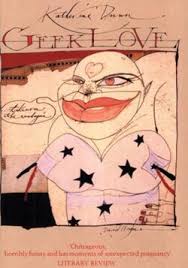 ★★★★★
★★★★★
Summary:
Geek Love is the story of the Binewskis, a carny family whose mater- and paterfamilias set out ― with the help of amphetamine, arsenic, and radioisotopes ― to breed their own exhibit of human oddities.
There's Arturo the Aquaboy, who has flippers for limbs and a megalomaniac ambition worthy of Genghis Khan . . . Iphy and Elly, the lissome Siamese twins . . . albino hunchback Oly, and the outwardly normal Chick, whose mysterious gifts make him the family's most precious ― and dangerous ― asset.
As the Binewskis take their act across the backwaters of the U.S., inspiring fanatical devotion and murderous revulsion; as its members conduct their own Machiavellian version of sibling rivalry, Geek Love throws its sulfurous light on our notions of the freakish and the normal, the beautiful and the ugly, the holy and the obscene. Family values will never be the same.
Thoughts:
Best book ever ACTUALLY. I read this book for such long chunks of time I gave myself headache level eyestrain, and then kept reading.
The summary is just the tip of the iceberg of stuff that actually happens in this book. I won't say anything else because I think you need to be shocked, but it's like 5 stories in one. And all of those stories are told to their fullest. It's so immersive I felt like the world of the Binewski's was real, and my actual life was just something distracting me from them.
The dark places this book goes to are disturbing but also creative!!! and the shock of them feels earned by the messed up world the author's created. PLEASE READ THIS BOOK. I can't recommend it enough.
November 4th, 2025.jpg) ★★★★
★★★★
Summary:In 1945 an Egyptian peasant unearthed what proved to be the Gnostic Gospels, thirteen papyrus volumes that expounded a radically different view of the life and teachings of Jesus Christ from that of the New Testament. In this spellbinding book, renowned religious scholar Elaine Pagels elucidates the mysteries and meanings of these sacred texts both in the world of the first Christians and in the context of Christianity today.
With insight and passion, Pagels explores a remarkable range of recently discovered gospels, including the Gospel of Thomas and the Gospel of Mary Magdalene, to show how a variety of “Christianities” emerged at a time of extraordinary spiritual upheaval. Some Christians questioned the need for clergy and church doctrine, and taught that the divine could be discovered through spiritual search. Many others, like Buddhists and Hindus, sought enlightenment — and access to God — within. Such explorations raised questions: Was the resurrection to be understood symbolically and not literally? Was God to be envisioned only in masculine form, or feminine as well? Was martyrdom a necessary — or worthy — expression of faith? These early Christians dared to ask questions that orthodox Christians later suppressed — and their explorations led to profoundly different visions of Jesus and his message.
Thoughts:
Kinda think I got the wrong cover for this but I'm keeping it. Great book if you're obssessed with religion and early Christian history. Anyone else will be bored. It's very academic in writing basically.
I wanted to learn more about Gnosticism cause I heard that they believed the God of the old testament was an evil demon who had made the world and that real God was Jesus who had come to free everyone. Like a worldview involving existence itself being made by an evil demon how novel how bleak. There is some info on that, but apparently it was a niche view even at the time.
Learning about all the weird sects of thought springing up at the time was great though. The idea that Christian texts where just basic knowledge, and that personal revelation is more impactful cause it's new is so cool. Never seen that before. Seeing what the early Jesus movement was up to and what could've been is just soooooo interesting to me.
October 28th, 2025.jpg) ★★★
★★★
Summary: I can't find a summary for this one IDK why. It's what it says on the can basically. Book about cults.
Thoughts:
Read this cause my proffesor recommended it. Pretty good, made me reconsider what I assume is a cult or not. I was hoping for more of a greatest hits of new religious movements, not an overview of how people view them tho.
The stuff about brainwashing as a excuse out of people behavior has stuck with me tho. Everytime I hear someone mention brainwashing this book whispers in my ear.
October 7th, 2025.webp) ★★
★★
Summary: Although a self-proclaimed skeptic, Alex Mar has secretly longed for revelation, envying people with unshakable beliefs. And so when she set out to direct the documentary American Mystic, she was drawn deep into the world of present-day witchcraft. Most people hear "witches" and think of horror films and Halloween, but to the one million Americans who practice Paganism, it's a nature-worshipping, polytheistic, and very real religion.
Witches of America follows Mar on her trip into Paganism and the occult, from its roots in 1950s England to its current American mecca in the Bay Area; from a gathering of more than a thousand witches in the Illinois woods to the New Orleans branch of one of the world's most influential magical societies. She takes part in dozens of rituals, some vast and some intimate, alongside all sorts of people-single mothers, programmers, veterans, and one California priestess who becomes a close friend. This world gives Mar the freedom to confront what she believes is possible-or hopes might be.
Thoughts:
Veryyyyyy interesing, but the info is suspect. Apparently the author told all the people in this book she wouldn't tell the details of their spiritual practice, and then published a whole book. So that's kinda evil. And any conclusions about the reality of witchcraft she may come to in the book seems suspect cause if I became convinced of witchcraft and had supposedly magic experiences I WOULD NOT do anything to piss the witchs off.
Anyways, the history of different witchcraft movements is intersting to say the least. Never knew Wicca was so new. I get the auther in her envy to believe in something the way the witches do. Having personal convictions about direct contact with the divine sounds awesome.
Some of the people she talks to tho I am concerned about. There's a guy at the end who claims to use real human remains stolen from New Orleans cemetaries for his practice. That's just actually evil and if the author actually met that guy she should've told someone like WTF. I don't even believe in hell but that guy is going.
September 11th, 2025.jpeg) ★★★★★
★★★★★
Summary: Remy and Alicia, a couple of insecure service workers, are not particularly happy together--but they are bound by a shared obsession with Jen, a beautiful former co-worker of Remy’s who now seems to be following her bliss as a globe-trotting jewelry designer. In and outside the bedroom, Remy and Alicia's entire relationship revolves around fantasies of Jen, whose every Instagram caption, outfit, and New Age mantra they know by heart.
Imagine their confused excitement when they run into Jen, in the flesh, and she invites them on a surfing trip to the Hamptons with her wealthy boyfriend and their group. Once there, Remy and Alicia try (a little too hard) to fit into Jen’s exalted social circle, but violent desire and class resentment bubble beneath the surface of this beach-side paradise, threatening to erupt. As small disturbances escalate into outright horror, Remy and Alicia tumble into an uncanny alternate reality, one shaped by their most unspeakable, deviant, and intoxicating fantasies. Is this what “self-actualization” looks like?
Part millennial social comedy, part psychedelic horror, and all wildly entertaining, A Touch of Jen is a sly, unflinching examination of the hidden drives that lurk just outside the frame of our carefully curated selves.
Thoughts:
One of my favorite books ever. It's kinda just the most annoying guy ever's POV until halfway through, but the second part is so worth it. To me this is the love story of the century. I don't think that's what the author wanted me to get out of this lol. But like Remy and Alicia are so bad that they're kinda perfect for each other. I love stories where two people kinda hate each other but because of outside circustances are forced to be important in each others' lives. In this case the outside circumstances being no one else wants these freaks. Also just so funny, so disturbing (poor Jen), so out there.
August 30th, 2025.jpg) ★★★★
★★★★
Summary: “Human beings have always been mythmakers.” So begins best-selling writer Karen Armstrong’s concise yet compelling investigation into myth: what it is, how it has evolved, and why we still so desperately need it. She takes us from the Paleolithic period and the myths of the hunters right up to the “Great Western Transformation” of the last five hundred years and the discrediting of myth by science. The history of myth is the history of humanity, our stories and beliefs, our curiosity and attempts to understand the world, which link us to our ancestors and each other. Heralding a major series of retellings of international myths by authors from around the world, Armstrong’s characteristically insightful and eloquent book serves as a brilliant and thought-provoking introduction to myth in the broadest sense—and explains why if we dismiss it, we do so at our peril.
Thoughts:
Was quite bored by this book UNTIL the end where everything came together and I was amazed. As always I loved the prehistory section, but found the middle a little dry until we got to the modern era. The idea that ancient people saw themselves as permanently in the realm of the sacred because of their alignment with myths is sooooo cool. And I think she really has a point about the lack of modern myths being an issue. The people crave for fictional people to see themselves through. Like look at kinning, we've always been doing this in some sort of way. I have a quote from this I loveeeee on my quotes page and I'll paste it here:
"in the pre-modern world, when people wrote about the past they were more concerned with what an event had meant. A myth was an event which, in some sense, had happened once, but which also happened all the time.
Because of our strictly chronological view of history, we have no word for such an occurrence, but mythology is an art form that points beyond history to what is timeless in human existence, helping us to get beyond the chaotic flux of random events, and glimpse the core of reality.
An experience of transcendence has always been part of the human experience. We seek out moments of ecstasy, when we feel deeply touched within and lifted momentarily beyond ourselves. At such times, it seems that we are living more intensely than usual, firing on all cylinders, and inhabiting the whole of our humanity.
Religion has been one of the most traditional ways of attaining ecstasy, but if people no longer find it in temples, synagogues, churches or mosques, they look for it elsewhere: in art, music, poetry, rock, dance, drugs, sex or sport. Like poetry and music, mythology should awaken us to rapture, even in the face of death and the despair we may feel at the prospect of annihilation. If a myth ceases to do that, it has died and outlived its usefulness."
August 18th, 2025.jpg) ★★★★
★★★★
In layered prose and with thoughtful, accessible scholarship, Aslan narrates the history of religion as a remarkably cohesive attempt to understand the divine by giving it human traits and emotions. According to Aslan, this innate desire to humanize God is hardwired in our brains, making it a central feature of nearly every religious tradition. As Aslan writes, “Whether we are aware of it or not, and regardless of whether we’re believers or not, what the vast majority of us think about when we think about God is a divine version of ourselves.
Thoughts:
I've heard from every source ever that Reza Aslan is not historically accurate butttt I liked the book. IDK if anything in it was right but I did enjoy myself, and the broad strokes ideas are close enough to reality I think. It's religious ancient history everyone has their own take anyways. It's what it is, one of those big books that just goes through early church histories, but this one had more pre-history and evolution which I enjoyed.
The conclusion that we are god is an interesting one. It's a fine conclusion and maybe also correct. I just personally like other interpretations of the universality of religion more. That's a me issue tho, and I still liked the book.
August 13nd, 2025.jpg) ★★★★★
★★★★★
Summary:
Linda is doing her best to lead a life that would appear normal to the casual observer. Weekdays, she earns $20 an hour moderating comments for a video-sharing platform, then rides the bus home to the windowless garage she rents on the outskirts of San Francisco. But on the last Friday of each month, she indulges in her true passion: taking BART to SFO for a round-trip flight to a regional hub. The destination is irrelevant because each trip means a new date with a handsome stranger—a stranger whose intelligent windscreens, sleek fuselages, and powerful engines make Linda feel a way that no human ever could.
Linda knows that she can’t tell anyone she’s sexually obsessed with planes—nor can she reveal her belief her destiny is to “marry” one of her suitors by dying in a plane crash, thereby uniting her with her soulmate plane for eternity. But when an opportunity arises to hasten her dream of eternal partnership, and the carefully balanced elements of her life begin to spin out of control, she must choose between maintaining the trappings of normalcy and launching herself headlong toward the love she’s always dreamed of.
Thoughts:
Best book ever. One of my new favs. The friendship in this book is so touching. Like truly beautiful. I love Linda, she's so funny but soooo real. For an out-there book it feels grounded cause of the characters realistic lives and circumstances. They all work at a shitty job and live in random renting situations. Karina feels so real too. I loved the detail of her being recovered from an eating disorder but still picking her food apart. Linda's want to have friendships and stuggle to feel connected to other women too... omg just perfect. Close to Convienence Store Woman for being an autism manifesto.
August 2nd, 2025.jpg) ★
★
Summary:
Discovering God is a monumental history of the origins of the great religions from the Stone Age to the Modern Age. Sociologist Rodney Stark surveys the birth and growth of religions around the world—from the prehistoric era of primal beliefs; the history of the pyramids found in Iraq, Egypt, Mexico, and Cambodia; and the great "Axial Age" of Plato, Zoroaster, Confucius, and the Buddha, to the modern Christian missions and the global spread of Islam. He argues for a free-market theory of religion and for the controversial thesis that under the best, unimpeded conditions, the true, most authentic religions will survive and thrive. Among his many Most people believe in the existence of God (or Gods), and this has apparently been so throughout human history. Many modern biologists and psychologists reject these spiritual ideas, especially those about the existence of God, as delusional. They claim that religion is a primitive survival mechanism that should have been discarded as humans evolved beyond the stage where belief in God served any useful purpose—that in modern societies, faith is a misleading crutch and an impediment to reason. In Discovering God , award-winning sociologist Rodney Stark responds to this position, arguing that it is our capacity to understand God that has evolved—that humans now know much more about God than they did in ancient times.
Thoughts:
Reading this was like pulling teeth just for it to have a dumbass conclusion :( This guy goes through all this info, which IDK even if it's accurate cause of other random stuff he says, just to conclude with uhhhh I think the Christians or maybe Jewish people got it right. BORING. Also the way he wrote about indigenous religions and the history of Islam was very rude I think.
Most of June, 2025.jpg) ★★★★★
★★★★★
Summary:
Designed for duty and destined for adventure, the secretly autonomous cyborg SecUnit with the self-awarded nom de guerre Murderbot really just wants to access media feeds and leave its human charges to their own devices. Unfortunately, Murderbot’s days of high-bandwidth soap opera viewing come to an end when an alien creature attacks the off world expedition it is assigned to guard. Here begins the award-winning and instantly beloved series The Murderbot Diaries, in which Murderbot investigates its own past and present, and ultimately rises to meet a threat to its former owner—and possibly friend—Dr. Mensah.
With Murderbot, New York Times bestselling author Martha Wells has created one of the most engaging characters to emerge from science fiction in decades. Witty observations, troubling memories, a sardonic voice, and the rendering of action-packed combat sequences with élan and panache combine for a virtuoso performance in all four of the novellas collected here: All Systems Red, Artificial Condition, Rogue Protocol, and Exit Strategy.
Across alien environments, corporate intrigue, and high tech adventure that reinvents and reenergizes genre staples like aliens, powered combat armor, and spaceships, Wells exhibits her mastery over an entire subgenre that stretches all the way back to Mary Shelley’s Frankenstein, the awakening into independence of an artificial being created by humans.
Thoughts:
I read Murderbot Diaries as the 4 novellas, but I like the collections cover better. Also I used to read each of these books in one day before my shift at Red Lobster. Feel like this inhanced my reading experience.
Murderbot is my bestie. I love Murderbot. These books are like junk food just for me. It's about a robot and it's about bodily autonomy and it's about being used your whole life and what that makes you and it's got stupid sci-fi whatever. I am the target audience. I read these to recover from all my religious/straight misery books.
Murderbot has an interesting approuch to the "Robot who wants to be human" trope cause it doesn't want to be a person and even insists that it isn't. Like it barely believes it's alive itself, and it's less about wanting to be a person and more about accepting that you are person.
IDK I love it I eat it up. Also the worldbuilding is great. I love how everyones in hippy polyamourous relationships and people are casually using neopronouns and everything. I also love how all the tech is alive cause of human neural tissue. Gross!
These books do have a touch of 2016 Marvel Movies annoying sarcastic humor butttt IDC. I think it works for a weird robot freak who doesn't understand basic life stuff. Like it would be acting like a edgy middle schooler. Anyways plz read Murderbot.
June 3rd, 2025.jpg) ★★★★★
★★★★★
Summary:
Thich Nhat Hanh looks at the applications and effectiveness of prayer in Buddhist and other spiritual traditions and closely examines the question of why we pray. introduces the reader to several meditation methods that re-envision prayer as an open, inclusive, and accessible practice that helps create healthy lives through the power of awareness and intention.
Thoughts:
This was when I was looking for books on the ideology/universality of prayer. Kinda hit the spot, but I'm still looking lol. It's Thich Nhat Hanh so it's good ofc. It's short but has some nice points about the hopefullness of prayer and such. Was just looking for a more academic look into why most religions have some form of prayer. Isn't it weird most traditions try talking to God, even though it pretty universally doesn't produce concrete results? What's all that about???
May 20th, 2025.jpg) ★★★★★
★★★★★
Summary:
The Barnes family is in trouble. Dickie’s once-lucrative car business is going under―but Dickie is spending his days in the woods, building an apocalypse-proof bunker with a renegade handyman. His wife, Imelda, is selling off her jewelry on eBay and half-heartedly dodging the attention of fast-talking cattle farmer Big Mike, while their teenage daughter, Cass, formerly top of her class, seems determined to binge drink her way through her final exams. As for twelve-year-old PJ, he’s on the brink of running away.
If you wanted to change this story, how far back would you have to go? To the infamous bee sting that ruined Imelda’s wedding day? To the car crash one year before Cass was born? All the way back to Dickie at ten years old, standing in the summer garden with his father, learning how to be a real man?
The Bee Sting , Paul Murray’s exuberantly entertaining new novel, is a tour de a portrait of postcrash Ireland, a tragicomic family saga, and a dazzling story about the struggle to be good at the end of the world.
Thoughts:
Can't believe this wasn't the first book I added to this page. Maybe my favorite book of all time. Reading this was like I was on amphetamines. The kids (especially PJ) are so realistic and loveable. THE PARENTS omg some of the best characters ever. I think about Dickie all the time. The part where it's like "he's a dad come in from the city" at the bar... torture. This book is so agonizing but sooo funny too and just so good. IDC if it was over 600 pages I would've read more.
February 13th, 2025.jpg) ★★★★
★★★★
Summary:
Irina obsessively takes explicit photographs of the average-looking men she persuades to model for her, scouted from the streets of Newcastle.
Placed on sabbatical from her dead-end bar job, she is offered an exhibition at a fashionable London gallery, promising to revive her career in the art world and offering an escape from her rut of drugs, alcohol, and extreme cinema. The news triggers a self-destructive tailspin, centred around Irina’s relationship with her obsessive best friend, and a shy young man from her local supermarket who has attracted her attention…
Boy Parts is the incendiary debut novel from Eliza Clark, a pitch-black comedy both shocking and hilarious, fearlessly exploring the taboo regions of sexuality and gender roles in the twenty-first century.
Thoughts:
This book is sooo Tumblerina. In a way I enjoy. Like her friend is posting about their homoerotic friendship on her blog. Godspeed. I think this narrator is so great and so evil. She really has the voice of a loser wannabe mean girl. And the way her trauma has affected her life is really interesting. I think she want's to escape the harm done to her by men by victimizing men herself, but because as her position as a white lady she is never seen as dangerous, which just drives her to more extremes. Just very compulsive read. Also very well written eating disorder. It's not the main plot but it's very realistic.
February 9th, 2025.jpg) ★★★★★
★★★★★
Summary:
Psychiatrist Viktor Frankl's memoir has riveted generations of readers with its descriptions of life in Nazi death camps and its lessons for spiritual survival. Based on his own experience and the stories of his patients, Frankl argues that we cannot avoid suffering but we can choose how to cope with it, find meaning in it, and move forward with renewed purpose. At the heart of his theory, known as logotherapy, is a conviction that the primary human drive is not pleasure but the pursuit of what we find meaningful. Man's Search for Meaning has become one of the most influential books in America; it continues to inspire us all to find significance in the very act of living.
Thoughts:
Very good very harrowing. I think the authors philosophy is backed up by his survival and seeming acceptance of living through the holocaust. Maybe acceptance isn't the right word, but him finding meaning from it is amazing. I think about this book a lot. For some reason I always think about the passage where he says monkeys being experimented on for medicine cannot comprehend why they are suffering, but they are contributing to a greater good they just don't understand. And that the scientists and the people the research benefits is grateful for them. It's in no way the most insightful part of the book, just an idea that's nice to play with.
January 24th, 2025.jpg) ★★★★★
★★★★★
Summary:
Cyrus Shams is a young man grappling with an inheritance of violence and loss: his mother’s plane was shot down over the skies of the Persian Gulf in a senseless accident; and his father’s life in America was circumscribed by his work killing chickens at a factory farm in the Midwest. Cyrus is a drunk, an addict, and a poet, whose obsession with martyrs leads him to examine the mysteries of his past—toward an uncle who rode through Iranian battlefields dressed as the angel of death to inspire and comfort the dying, and toward his mother, through a painting discovered in a Brooklyn art gallery that suggests she may not have been who or what she seemed.
Kaveh Akbar’s Martyr! is a paean to how we spend our lives seeking meaning—in faith, art, ourselves, others.
Thoughts:
I love this book so bad. I love Cyrus he's so real. There's a point in this book where he's fighting with his sort-of BF I think about a lot. His boyfriend is mad at him for being obsessed with dying and stuff, and Cyrus is like "What do you want me to say? That none of this is enough to make me want to stay?" Which I think is very poignant. Like Cyrus is clearly artistic and involved and loves the world, and still nothing is enough to make him not want to die.
I just think this book has a lot to say about people living horrible miserable lives and there still being meaning in their lives, but also that their suffering is senseless. I'm not sure how I feel about the ending of the book. I feels like it might be a dream, but IDK. I hope Cyrus is happy.
January 14th, 2025
★★★★★
Summary:
"In Ashkenazi Jewish folklore, a golem is a humanoid being created out of mud or clay and animated through secret prayers. Its sole purpose is to defend the Jewish people against the immediate threat of violence. It is always a rabbi who makes a golem, and always in a time of crisis.
But Len Bronstein is no rabbi—he’s a Brooklyn art teacher who steals a large quantity of clay from his school, gets extremely stoned, and manages to bring his creation to life despite knowing little about Judaism and even less about golems. Unable to communicate with his nine-foot-six, four hundred–pound, Yiddish-speaking guest, Len enlists a bodega clerk and ex-Hasid named Miri Apfelbaum to translate.
Eventually, the golem learns English by binge-watching Curb Your Enthusiasm after ingesting a massive amount of LSD and reveals that he is a creature with an ancestral memory; he recalls every previous iteration of himself, proving to be a repository of Jewish history and trauma. He demands to know what crisis has prompted his re-creation and whom he must destroy. When Miri shows him a video of white nationalists marching and chanting “Jews will not replace us,” the answer becomes clear.
Thoughts:
Just incredibly good. It's been over a year and I still think about this book. So much good stuff to say about cultural identity and generational trauma and how communities adapt to violence. Also one of fav topics ever, debates about what type of justice is good. It has all these conversatiosn while being short, easy to read, and soooooo funny. I think about some of the jokes in this book as much as I think about the serious stuff!!!
It's setting is super modern too. It has the characters fighting the current brand of bigotry thats ruining the world, and it's cathartic (?) to see evil so familiar to my time dealt with. PLEASE READ THIS BOOK.
Spoiler here but just like read this bit. I loveeee it. "“And if we kill everybody who hates us,” he continued, “we’ll be safe.”
“Yes. For once.”
Len raised his finger in the air like a rabbi. “But we’ll no longer be Jews. We’ll be something else.”
Miri shook her head. “Bullshit. We’ve always defended ourselves. Ask The Golem. Oh, wait—you can’t.”
“Defending ourselves is different than killing every Jew-hater.”
“You sound like a fucking idiot.”
Len spread his arms to take in everything: the road, the night, the moon. The water, somewhere, that neither one of them could see.
“We’re supposed to repair the world, Miri. Tikkun olam.”
Miri cocked her head and blinked at him.
“Dickhead,” she said lovingly, “has it ever occurred to you that maybe this is how we repair the world?”
They stared at each other in silence, out of words and a long way from home."
December 11th, 2024
★★★★
Summary: Summary: Summary: Summary: Summary: Summary: Summary: Summary:
Summary:
Summary:
Summary: Link that doesn't work anymore but still has other good trans books: Here
Summary: Summary: Link: Here
Link: Here Summary: Link: Here
"One day, the mother was a mother but then, one night, she was quite suddenly something else...
At home full-time with her two-year-old son, an artist finds she is struggling. She is lonely and exhausted. She had imagined - what was it she had imagined? Her husband, always travelling for his work, calls her from faraway hotel rooms. One more toddler bedtime, and she fears she might lose her mind.
Instead, quite suddenly, she starts gaining things, surprising things that happen one night when her child will not sleep. Sharper canines. Strange new patches of hair. New appetites, new instincts. And from deep within herself, a new voice..."
Thoughts:
Loveeeeee Nightbitch. It is written so interestingly, kinda like a fairytale. This is what started my obsession with books about motherhood lol. Also made me so sure I never want kids cause lord. Being a stay at home mom looks so torturous in this book. I would die.
I like that the main character doesn't think of herself as the typical mother and seems uncomfortable with it taking over her identity. Like, before the body horror of becoming a dog her autonomy was already stripped by motherhood. The other moms are also fleshed out and real despite the MC kinda looking down on them.
I was confused about some stuff. The whole MLM medication plotline was all over the place and then kinda dissapearead? And the ending of the book seems unrealistic. I know thats dumb to say when this story is about a lady becoming a dog but still. The begining felt grounded in the real experience of being a mother, and the end felt like wish fufillment. I think that was the point, it just felt out of place to me. Good for the mother though glad she gets to be a freak.
November 21st, 2024
★★★★★
"For years Carmen Maria Machado has struggled to articulate her experiences in an abusive same-sex relationship. In this extraordinarily candid and radically inventive memoir, Machado tackles a dark and difficult subject with wit, inventiveness and an inquiring spirit, as she uses a series of narrative tropes—including classic horror themes—to create an entirely unique piece of work which is destined to become an instant classic."
Thoughts:
I didn't expect this one to be something I'd love so much but wow I love it. It's written in a way that's so compulsive to read, which helps with the subject matter. The fable/trope theme gives a horrible sense of forboding, or like looking back and realizing how bad things were. Gave me catharsis I didn't know I needed.
October 22nd, 2024
★★★★★
"The Bluest Eye is Toni Morrison's first novel, a book heralded for its richness of language and boldness of vision. Set in the author's girlhood hometown of Lorain, Ohio, it tells the story of black, eleven-year-old Pecola Breedlove. Pecola prays for her eyes to turn blue so that she will be as beautiful and beloved as all the blond, blue-eyed children in America. In the autumn of 1941, the year the marigolds in the Breedloves' garden do not bloom. Pecola's life does change—in painful, devastating ways.
With its vivid evocation of the fear and loneliness at the heart of a child's yearning, and the tragedy of its fulfillment. The Bluest Eye remains one of Toni Morrison's most powerful, unforgettable novels- and a significant work of American fiction."
Thoughts:
Nothing I can say that hasn't been said elsewhere better but just such a good book. Good feels wrong because this is one of the most heartbreaking books I've ever read but you know what I mean. The whole time you're thinking, "Someone is going to help these girls. Surely some adult is going to do something and help them." And you just feel more and more desperate and more and more hopeless the longer you read. And then it's over.
September 20th, 2024
 ★★★★★
★★★★★
"An exploration of why people all over the world love to engage in pain on purpose--from dominatrices, religious ascetics, and ultramarathoners to ballerinas, icy ocean bathers, and sideshow performers
Masochism is sexy, human, reviled, worshipped, and can be delightfully bizarre. Deliberate and consensual pain has been with us for millennia, encompassing everyone from Black Plague flagellants to ballerinas dancing on broken bones to competitive eaters choking down hot peppers while they cry. Masochism is a part of us. It lives inside workaholics, tattoo enthusiasts, and all manner of garden variety pain-seekers.
At its core, masochism is about feeling bad, then better—a phenomenon that is long overdue for a heartfelt and hilarious investigation. And Leigh Cowart would they are not just a researcher and science writer—they’re an inveterate, high-sensation seeking masochist. And they have a few Why do people engage in masochism? What are the benefits and the costs? And what does masochism have to say about the human experience?"
By participating in many of these activities themselves, and through conversations with psychologists, fellow scientists, and people who seek pain for pleasure, Cowart unveils how our minds and bodies find meaning and relief in pain—a quirk in our programming that drives discipline and innovation even as it threatens to swallow us whole.
Thoughts:
Fun and digestible pop-science book about masochism. I'm very fascinated by masochism and people who do horrible stuff to themselves for fun. There's not very many accessible books about the topic (other than like BDSM erotica) so I was really happy to find this book.
The begining is more science heavy than the end but I liked all of it. There's a chapter about ultra-marathon runners that I think about all the time. I can't imagine being so devoted to something that you'd run to the point of hallucinating but I do respect it. There's a bit of annoying millenial #relatable jokes in this but other than that great read.
September 17th, 2024
 ★★★★★
★★★★★
Set in the contemporary Paris of American expatraites, liasons, and violence, a young man finds himself caught between desire and conventional morality. James Baldwin's brilliant narrative delves into the mystery of loving with a sharp, probing imagination, and he creates a moving, highly controversial story of death and passion that reveals the unspoken complexities of the heart.
Thoughts:
I mean it's James Baldwin of course it's life changing. I don't care for books mainly about romance but this one got me. I think about it all the time. The characters are kinda like the ones in myths with how they're archetypes you can apply everywhere. But they're also so real and 3D. Basically please read Giovanni's room it's what a classic should be. ALSO, read this quote that haunts me:
“Love him,’ said Jacques, with vehemence, ‘love him and let him love you. Do you think anything else under heaven really matters? And how long, at the best, can it last, since you are both men and still have everywhere to go? Only five minutes, I assure you, only five minutes, and most of that, helas! in the dark. And if you think of them as dirty, then they will be dirty— they will be dirty because you will be giving nothing, you will be despising your flesh and his. But you can make your time together anything but dirty, you can give each other something which will make both of you better—forever—if you will not be ashamed, if you will only not play it safe.’ He paused, watching me, and then looked down to his cognac. ‘You play it safe long enough,’ he said, in a different tone, ‘and you’ll end up trapped in your own dirty body, forever and forever and forever—like me.”
August 27th, 2024
_front_cover,_first_edition_IMGCentury.jpg)
★★★★
"Paul Sheldon. He's a bestselling novelist who has finally met his biggest fan. Her name is Annie Wilkes and she is more than a rabid reader - she is Paul's nurse, tending his shattered body after an automobile accident. But she is also his captor, keeping him prisoner in her isolated house."
Thoughts:
Felt like I was also addicted to drugs reading this. I read this during a horrible bout of insomnia and I didn't even care that I couldn't sleep cause it gave me more time to read this book. Incredibly compulsive. There are a good amount of issues with this book but I can almost promise it'll be an enjoyable read.
Not much more to say. It's scary, it's thrilling, it's gross. The movies also so good so you can experience it again lol. I wish there was a sequel just about Paul dealing with everything that happened cause good lord.
September 6th, 2024
.jpg)
★★★★★
In 1972, when workers in Pottstown, Pennsylvania, were digging the foundations for a new housing development, the last thing they expected to uncover was a human skeleton. Who the skeleton was and how it got buried there were just two of the long-held secrets that had been kept for decades by the residents of Chicken Hill, the dilapidated neighborhood where immigrant Jews and African Americans lived side by side, sharing ambitions and sorrows.
Chicken Hill was where Moshe and Chona Ludlow lived when Chona ran the Heaven & Earth Grocery Store, which served the neighborhood's quirky collection of blacks and European immigrants, helped by her husband, Moshe, a Romanian-born theater owner who integrated the town's first dance hall. When the state came looking for a deaf black child, claiming that the boy needed to be institutionalized, Chicken Hill's residents—roused by Chona's kindess and the courage of a local black worker named Nate Timblin—banded together to keep the boy safe.
As the novel unfolds, it becomes clear how much the people of Chicken Hill have to struggle to survive at the margins of white Christian America and how damaging bigotry, hypocrisy, and deceit can be to a community. When the truth is revealed about the skeleton, the boy, and the part the town’s establishment played in both, McBride shows that it is love and community—heaven and earth—that ultimately sustain us.
Thoughts:
This book is so heartwarming idk how to describe it other than that. Very dark stuff happens but there's a tenderness that makes it all worth it. Like I finished it and felt a deep sense that everything would be okay. Literally we can anything with the power of community.
August 9th, 2024
★★★★★
"Matsutake is the most valuable mushroom in the world—and a weed that grows in human-disturbed forests across the northern hemisphere. Through its ability to nurture trees, matsutake helps forests to grow in daunting places. It is also an edible delicacy in Japan, where it sometimes commands astronomical prices. In all its contradictions, matsutake offers insights into areas far beyond just mushrooms and addresses a crucial question: what manages to live in the ruins we have made?
A tale of diversity within our damaged landscapes, The Mushroom at the End of the World follows one of the strangest commodity chains of our times to explore the unexpected corners of capitalism. Here, we witness the varied and peculiar worlds of matsutake commerce: the worlds of Japanese gourmets, capitalist traders, Hmong jungle fighters, industrial forests, Yi Chinese goat herders, Finnish nature guides, and more. These companions also lead us into fungal ecologies and forest histories to better understand the promise of cohabitation in a time of massive human destruction.
By investigating one of the world's most sought-after fungi, The Mushroom at the End of the World presents an original examination into the relation between capitalist destruction and collaborative survival within multispecies landscapes, the prerequisite for continuing life on earth."
Thoughts:
My little brother got this book for me after telling a british book store owner in Seattle that I, "Like communism and stuff." Apparently the british guy didn't even pause he just immediatly recommended this book. And he was right.
I read this when I was first strating to read after not reading anything for years. It was very hard to get through, but so so worth it. It's written kinda academically, but also kinda with fancy prose. It's like having to unravel a bunch of necklaces, which adds to the book, it's just not an easy read. Every chapter is so interesting and informative I felt like I had a new perspective on whatever it was about after I was done. The main theme is the interconnectedness of life. Through nature or history or destruction it's all us it's all we. Made me feel so hopeful and happy to be part of the world. Genuinely beautiful can't recommend enough.
June 10th, 2024
.jpg)
★★★★★
This pamphlet is aimed at anarchists thinking about how to deal with abuses of power and acts of domination in their communities. It brings together a collection of articles representing different approaches to this problem, from transformative justice-based accountability processes to retributive-based acts of survivor-led retaliation.
Thoughts:
My religion special interest became an interest in hell for a little but, and then I got obsessed with restorative justice to recover from all that. Conceptually the two are idealogical opposites. This is a good short collection of essays that gives a fair chance to restorative justice I think. It doesn't act like it would be a perfect system and provides interesting alternatives. I was really interested in the essay where the writer talks about breaking into/trashing a rapist to get revenge on him.
July 9th, 2024
.jpg)
★★★★★
Reese almost had it all: a loving relationship with Amy, an apartment in New York City, a job she didn't hate. She had scraped together what previous generations of trans women could only dream of: a life of mundane, bourgeois comforts. The only thing missing was a child. But then her girlfriend, Amy, detransitioned and became Ames, and everything fell apart. Now Reese is caught in a self-destructive pattern: avoiding her loneliness by sleeping with married men.
Ames isn't happy either. He thought detransitioning to live as a man would make life easier, but that decision cost him his relationship with Reese—and losing her meant losing his only family. Even though their romance is over, he longs to find a way back to her. When Ames's boss and lover, Katrina, reveals that she's pregnant with his baby—and that she's not sure whether she wants to keep it—Ames wonders if this is the chance he's been waiting for. Could the three of them form some kind of unconventional family—and raise the baby together?
This provocative debut is about what happens at the emotional, messy, vulnerable corners of womanhood that platitudes and good intentions can't reach. Torrey Peters brilliantly and fearlessly navigates the most dangerous taboos around gender, sex, and relationships, gifting us a thrillingly original, witty, and deeply moving novel."
Thoughts:
AMAZING. I read this cause I saw someone online say it was saying "being wasian is kinda like being trans". I'm wasian and trans so I needed to find out. A lot of times gay people don't have gay social lives in books, but in this book the characters circles are also gay. That element, along with just everything, made the characters so real. I felt like I was a fly on the wall of this messy interpersonal drama. The main scene that stuck with me was the part where Reese is going to a funeral and says that these are really common in the community, and the musings on how queer people are sometimes behind their peers in time because of not having typical adolescent experiences.
July 2nd, 2024
★
"In Brexit Britain, a young transgender doctor called Ry is falling in love – against their better judgement – with Victor Stein, a celebrated professor leading the public debate around AI.
Meanwhile, Ron Lord, just divorced and living with Mum again, is set to make his fortune launching a new generation of sex dolls for lonely men everywhere.
Across the Atlantic, in Phoenix, Arizona, a cryogenics facility houses dozens of bodies of men and women who are medically and legally dead… but waiting to return to life.
But the scene is set in 1816, when nineteen-year-old Mary Shelley writes a story about creating a non-biological life-form. ‘Beware, for I am fearless and therefore powerful.'
What will happen when homo sapiens is no longer the smartest being on the planet? Jeanette Winterson shows us how much closer we are to that future than we realise. Funny and furious, bold and clear-sighted, Frankissstein is a love story about life itself."
Thoughts:
Reviewing this just to hate. Topics that this book includes are the writing of Frankenstein, the life of Mary Shelley, miscarriage, sex robots, how much being a woman is hard, how much being trans is hard, capitalism's evils, cryogenics, religion, anti-semitism, AI, uploading your brain to a computer, and reincarnation. All that and it was somehow still so so so boring.
June 30th, 2025
.jpg) ★★★★
★★★★
Everyone is female "When I say that everyone is female, I mean very simply that everyone wants to be a woman. What one does with this desire is what we call gender." So begins Andrea Long Chu's investigation into gender and desire, females and bodies, radical dreams and philosophical pessimism, and feminism as a form of political suicide. Feminism, Chu argues, is an untenable claim, and "when you make an untenable claim, your desire is showing, like a shy tattoo peeking out from a sleeve." Written in a series of linked theses, this is a provocative and searching text from our most exciting new public intellectual, a self described "sad trans girl in Brooklyn." Chu wears her heart on her sleeve with wit, style, and a manic searching grace.
Thoughts:
Everyone says this is confusing and yeah they are right. There are so many good ideas tho. The history about S.C.U.M. and the woman who shot Andy Warhol was my fav part. TBH it loses me at the end, but I'd recommend just for something to mentally chew on.
May 30th, 2025
.jpg) ★★★★★
★★★★★
What happens when we die? A recent Pew Research poll showed that 72% of Americans believe in a literal heaven, 58% in a literal hell. Most people who hold these beliefs are Christian and assume they are the age-old teachings of the Bible. But eternal rewards and punishments are found nowhere in the Old Testament and are not what Jesus or his disciples taught.
So where did the ideas come from?
In clear and compelling terms, Bart Ehrman recounts the long history of the afterlife, ranging from The Epic of Gilgamesh up to the writings of Augustine, focusing especially on the teachings of Jesus and his early followers. He discusses ancient guided tours of heaven and hell, in which a living person observes the sublime blessings of heaven for those who are saved and the horrifying torments of hell for the damned. Some of these accounts take the form of near death experiences, the oldest on record, with intriguing similarities to those reported today.
One of Ehrman’s startling conclusions is that there never was a single Greek, Jewish, or Christian understanding of the afterlife, but numerous competing views. Moreover, these views did not come from nowhere; they were intimately connected with the social, cultural, and historical worlds out of which they emerged. Only later, in the early Christian centuries, did they develop into the notions of eternal bliss or damnation widely accepted today.
As a historian, Ehrman obviously cannot provide a definitive answer to the question of what happens after death. In Heaven and Hell, he does the next best thing: by helping us reflect on where our ideas of the afterlife come from, he assures us that even if there may be something to hope for when we die, there is certainly nothing to fear.
Thoughts:
I went through a phase of being obsessed with hell. Not the best religious concept to get fixated on. This book was a good exploration of religious traditons and how they could've combined to create the hell we know today. It's at times dry, but easy to understand for all the ground it covers. I don't have much to say ig but I do love this book dearly. Also Bart D. Ehrman has a cute blog where he talks about religion which I'm a fan of so he's always 5 stars in my book.
May 22nd, 2024
 ★★★★
★★★★
Summary:
Since its publication, this Lambda Literary Award-nominated book has become a classic must-read on the shelf of books addressing human sexuality and identity. Widely cited as among the most useful books of its kind, Leatherfolk is both historical witness and provocative treatise regarding a distinct subculture that has withstood decades of political harassment and other challenges to its survival.
Spanning the decades from the 1940s onward, this collection of vibrant writing documents the many eras and shifts of attitude that have affected the gay and lesbian leather underground, and its influence on the society beyond.
Thoughts:
Incredibly interesting queer history. This is like the third book I read after not reading for years lol. I think it's a good read for anyone interested in LGBT/kink history. I love love love to read about old subcultures, and this book scratches that itch so well.
It does have some pretty obvious issues though. For one thing, for what is supposed to be an overview of the whole subculture, there are very few chapters by women, trans people, or anyone not white. Such interesting talks of gender and power dynamics and oppression, but only letting the gay white dudes talk? Come on guys. And the final section oml. Just skip it. It's the spirituality section, and while interesting, is almost exclusively like white hippie cultural appropriation stuff.
I would still say this book is a good read, just also a product of it's time.
May 23rd, 2024
.jpg)
★★★★
"Natsuki isn't like the other girls. She has a wand and a transformation mirror. She might be a witch, or an alien from another planet. Together with her cousin Yuu, Natsuki spends her summers in the wild mountains of Nagano, dreaming of other worlds. When a terrible sequence of events threatens to part the two children forever, they make a promise: survive, no matter what.
Now Natsuki is grown. She lives a quiet life with her asexual husband, surviving as best she can by pretending to be normal. But the demands of Natsuki's family are increasing, her friends wonder why she's still not pregnant, and dark shadows from Natsuki's childhood are pursuing her. Fleeing the suburbs for the mountains of her childhood, Natsuki prepares herself with a reunion with Yuu. Will he still remember their promise? And will he help her keep it?"
Thoughts:
Read this before I realized that Sayaka Murata's works are always full of the most taboo and shocking stuff imaginable and that Convenience Store Woman is the expection lol. I say this as a big Sayaka Murata fan.
This book is all over recomendation lists, which it deserves because it's great, but it def needs a hefty warning. It has every upsetting topic ever. CSA, incest, murder, cannibalism, EVERYTHING. And it's shown graphically. That said it is amazing. It captures the experience of being young and abused and desperately trying to make sense of the situation so well. Natsuki as an adult is also just an interesting portrait of a victim. I love her and her freak husband. I don't want to say anything else cause the book should remain a little shocking. Just be informed before you read.
May 19th, 2024
 ★★★★★
★★★★★
Summary:
Keiko has never fit in, neither in her family, nor in school, but when at the age of eighteen she begins working at the Hiiromachi branch of “Smile Mart,” she finds peace and purpose in her life. In the store, unlike anywhere else, she understands the rules of social interaction―many are laid out line by line in the store’s manual―and she does her best to copy the dress, mannerisms, and speech of her colleagues, playing the part of a “normal” person excellently, more or less. Keiko is very happy, but the people close to her, from her family to her coworkers, increasingly pressure her to find a husband, and to start a proper career, prompting her to take desperate action…
A brilliant depiction of a world hidden from view, Convenience Store Woman is an ironic and sharp-eyed look at contemporary work culture and the pressures we all feel to conform, as well as a charming and completely fresh portrait of an unforgettable heroine.
Thoughts:
Book that felt like it knew me. This is like the autistic woman manifesto. Sayaka Murata is one of my favorite authors ever because she gets it. Really good exploration of trying to balance pleasing others/trying to live a life you enjoy, and then realizing you're failing at both! It's around 100 pages too, so if you want to ruin an afternoon plz read.
May 13th, 2024
.jpg) ★★★★
★★★★
Summary:
Lia and Cassie are best friends, wintergirls frozen in fragile bodies, competitors in a deadly contest to see who can be the thinnest. But then Cassie suffers the ultimate loss—her life—and Lia is left behind, haunted by her friend's memory, and feeling guilty for not being able to help save her.
Thoughts:
Ashamed to say that this is the book that got me back into reading. For the uninformed, online this book is read by people to trigger them and make their eating disorders worse :( IDK if this book can be forgiven for the impact it has caused but if you read this and you're not in a very sick headspace, you just feel bad for Lia. I don't think it's very glamorizing.
Anyways this is really good. I think Lia's and Cassie's thing being revealed to be maybe romantic was really good for reshaping how you saw their relationship throughout the book. Also liked that the guy love interest was a dick! The trope of a romance curing and ed is so annoying. The prose in this is insanely purple, but I think it works. That is what it felt like to be a navel gazing miserable teenage girl with an eating disorder.